
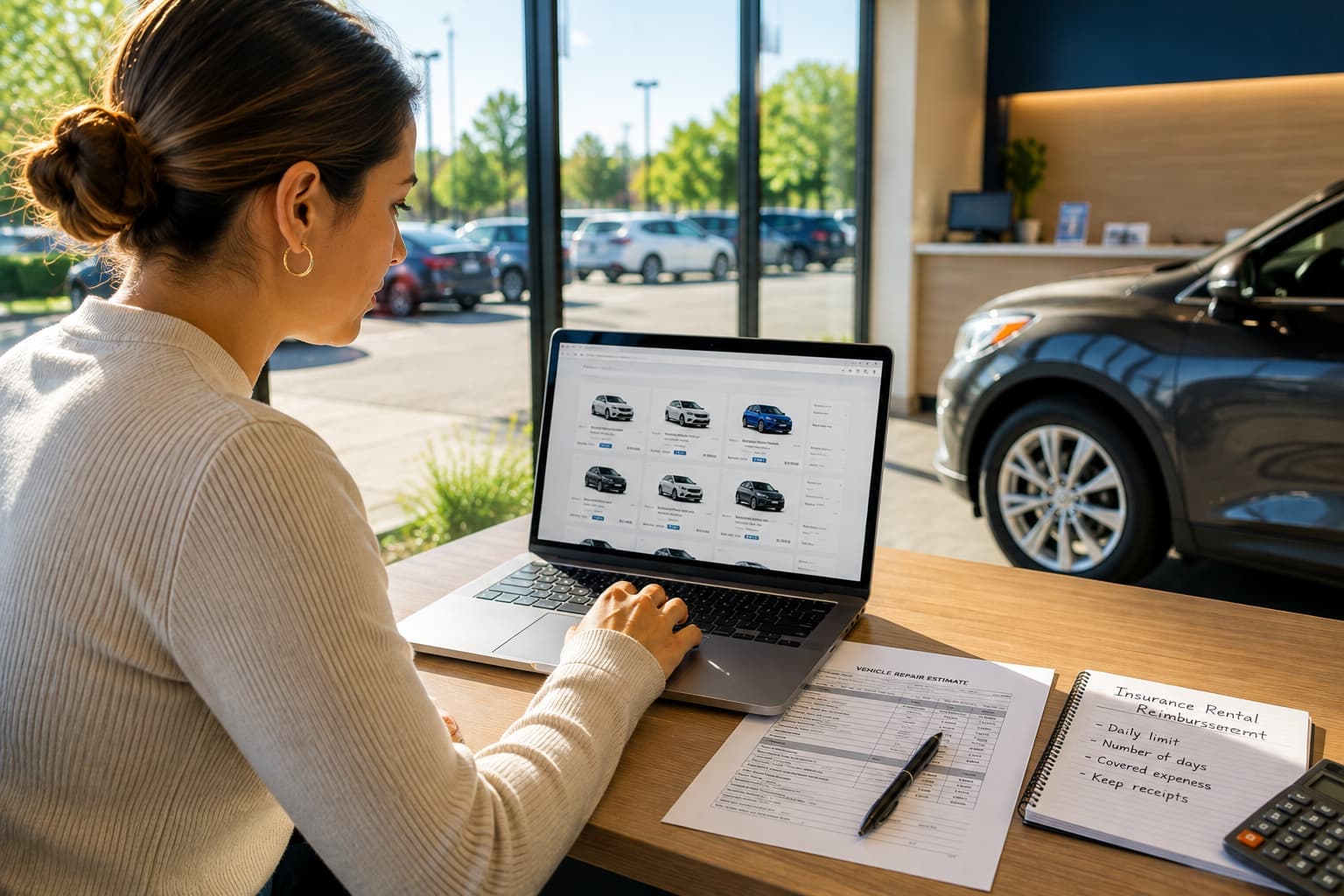
Your vehicle is in the repair shop after a covered claim, and your insurance company has approved a rental car.
That is good news—but it does not necessarily mean you can choose any vehicle at any price.
Rental reimbursement coverage normally includes a daily limit and a maximum amount the insurance company will pay for the entire rental period. For example, your policy may provide up to $30 per day, with a $900 maximum for the claim.
When you search for a rental through Priceline, you may see several different prices. An economy car might cost $27 per day, while a midsize sedan costs $39 and an SUV costs more than $60.
If you choose a vehicle that costs more than your daily reimbursement limit, you may be responsible for the difference.
The key is to understand your limits before booking and compare the full rental cost—not just the first price shown in the search results.
What Is Rental Reimbursement Coverage?
Rental reimbursement is optional auto insurance coverage that can help pay for a temporary rental vehicle while your insured vehicle is unavailable after a covered claim.
It is commonly used when your car cannot be driven or must remain at a repair shop after covered damage.
Rental reimbursement does not normally mean the insurance company will pay any rental price you choose. Most policies place limits on how much will be reimbursed.
Those limits may include:
- A maximum amount per day
- A maximum total amount for the claim
- A maximum number of covered days
- Requirements related to the covered loss and repair timeline
For this guide, we will use an example limit of:
- $30 per day
- $900 total maximum
Your actual limits may be different, so check with your adjuster or review your policy before reserving a vehicle.
Start With Your Daily and Total Limits
Before opening Priceline, confirm two numbers:
- How much your insurance will reimburse each day
- The maximum amount available for the entire rental
The daily limit affects how much you may owe each day. The total limit affects how long the insurance benefit can last.
Here is how a $30 daily limit could work:
| Priceline daily rate | Insurance reimbursement | Possible daily cost to you |
|---|---|---|
| $24 | $24 | $0 |
| $30 | $30 | $0 |
| $36 | $30 | $6 |
| $45 | $30 | $15 |
| $60 | $30 | $30 |
These examples use the base daily rate only. Taxes, fees, deposits, upgrades, and optional products may affect the final amount.
Even a small difference can add up during a longer repair.
For example, paying an extra $6 per day for 20 days would add $120 to your out-of-pocket cost. A vehicle that costs $15 over your daily limit would add $300 over the same period.
That is why it helps to look beyond the vehicle itself and calculate what the price difference could mean over the expected repair timeline.
Understand How the $900 Maximum Works
A $900 maximum does not automatically guarantee 30 days of rental reimbursement.
You would receive approximately 30 days only if the reimbursable cost stays at or below $30 per day.
If the rental costs more, the insurance company may still reimburse no more than the daily limit, while the total benefit continues to be subject to the $900 maximum.
Here is a simple way to look at it:
| Daily reimbursed amount | Approximate number of days before reaching $900 |
|---|---|
| $30 per day | 30 days |
| $25 per day | 36 days |
| $20 per day | 45 days |
However, rental reimbursement may end earlier when your vehicle is repaired, when the covered rental period ends, or when another policy condition applies.
The maximum is not extra money you automatically receive. It is the most the policy may reimburse for an eligible rental under the claim.
Search Economy and Compact Vehicles First
When searching Priceline, begin with the vehicle classes most likely to stay within your daily limit.
These commonly include:
- Economy
- Compact
- Small sedan
- Standard compact models
These vehicle classes are usually priced lower than SUVs, trucks, luxury vehicles, convertibles, and larger passenger vehicles.
The exact vehicle is not always guaranteed. Rental listings often show a sample model followed by language such as “or similar.” That means you are generally reserving a vehicle class rather than one specific make and model.
A listing might show examples such as:
- Mitsubishi Mirage or similar
- Kia Rio or similar
- Nissan Versa or similar
- Hyundai Accent or similar
- Toyota Corolla or similar
Availability and prices can change by location, travel date, demand, and rental company.
Focus on the total price and vehicle class rather than choosing a rental based only on the example model shown.
Compare the Full Price, Not Just the Daily Rate
A Priceline search result may highlight a low daily price, but that number may not represent the entire amount you will pay.
Before booking, review the price details for:
- Taxes
- Facility charges
- Airport fees
- Location surcharges
- One-way rental fees
- Young-driver fees
- Additional-driver fees
- Optional equipment
- Fuel plans
- Toll programs
- Protection products
For example, a vehicle advertised at $28 per day may appear to fit within a $30 reimbursement limit. After taxes and location fees are added, the average daily cost could be higher.
Ask your adjuster how taxes and mandatory fees are handled under your rental reimbursement coverage. Do not assume every item on the rental receipt will be reimbursed.
Optional purchases are especially important to review. GPS devices, child seats, fuel packages, roadside plans, upgrades, and additional protection can increase the final bill and may remain your responsibility.
Compare Airport and Neighborhood Locations
Airport rental locations can be convenient, but they may include additional facility fees and airport-related surcharges.
When possible, compare the airport price with nearby neighborhood rental locations on Priceline.
A location a few miles away may offer:
- A lower base rate
- Fewer location fees
- Different vehicle availability
- A lower overall total
However, consider how you will reach the location. A lower rental price may not save much if you need to pay for a long rideshare trip or other transportation.
Compare the full cost and convenience of each option rather than choosing the location with the lowest advertised daily rate.
Book Early When You Know Repairs Are Scheduled
If your repair shop has already scheduled your vehicle, consider comparing rental prices as soon as you know you’ll need a temporary vehicle.
Booking earlier may give you:
- More vehicle choices
- Better pricing
- A greater chance of finding a rental within your daily reimbursement limit
Waiting until the last minute can leave fewer affordable vehicles available, especially during holidays, weekends, or periods of high travel demand.
Even if your repair dates change slightly, reviewing prices ahead of time can help you understand what to expect before you need the rental.
Keep Your Rental Agreement and Receipts
Once you’ve reserved your rental, save copies of your paperwork until your claim is complete.
Depending on your insurance company, you may need documents such as:
- Your Priceline reservation confirmation
- The rental agreement
- Itemized rental receipt
- Payment receipt
- Vehicle return receipt
Keeping these documents organized can make it easier if your insurance company requests additional information during the reimbursement process.
If you have questions about which documents are needed, ask your claims adjuster before returning the vehicle.
Can You Upgrade the Rental?
Sometimes.
If you’d prefer a larger vehicle, SUV, or another upgrade, ask both the rental company and your insurance adjuster before making the change.
In many cases, you may be able to choose a more expensive vehicle if you’re willing to pay the difference between your insurance reimbursement and the actual rental cost.
For example, if your policy reimburses up to $30 per day and the upgraded vehicle costs $45 per day, you may be responsible for the additional $15 per day, along with any applicable taxes or fees.
Before accepting an upgrade, calculate what the extra cost could be over the entire rental period.
Before You Reserve Through Priceline
Before completing your reservation, take a few minutes to confirm a few important details.
✔ Know your daily rental reimbursement limit.
✔ Know your maximum reimbursement amount.
✔ Compare more than one Priceline pickup location.
✔ Review the estimated total price—not just the advertised daily rate.
✔ Understand which optional products increase the final cost.
✔ Keep copies of your reservation and receipts.
✔ Contact your adjuster if you have questions about what your policy reimburses.
Spending a few extra minutes before booking can help reduce unexpected costs later.
Looking for Auto Insurance That Includes Rental Reimbursement?
Rental reimbursement coverage can make life a little easier when your vehicle is in the repair shop after a covered claim.
If you’re shopping for auto insurance or reviewing your current policy, it’s a good opportunity to see whether rental reimbursement coverage is available and whether the limits fit your needs.
Cheapest Auto Insurance can help you compare your options and find affordable coverage that works for your budget.
Start your free online quote today and learn more about the coverage available to you.
Frequently Asked Questions
Can I book my rental car through Priceline if my insurance company is paying?
Yes. In many situations, you can reserve a rental vehicle through Priceline even if your insurance company is providing rental reimbursement after a covered claim. Before booking, confirm your daily reimbursement limit and any claim requirements with your insurance adjuster.
What happens if my Priceline rental costs more than my daily reimbursement?
If your rental costs more than your policy’s daily reimbursement limit, you may be responsible for paying the difference out of pocket. Review the total estimated cost before completing your reservation.
Does rental reimbursement cover taxes and fees?
It depends on your policy and the insurance company handling your claim. Ask your adjuster how taxes, mandatory fees, and optional charges are handled before reserving the vehicle.
Can I upgrade my rental car?
Often, yes. However, you’ll generally be responsible for any additional cost that exceeds your insurance company’s reimbursement limit unless your adjuster approves otherwise.
Is the cheapest rental always the best choice?
Not necessarily. Compare the total price, pickup location, mileage policies, vehicle availability, and any additional fees before making your decision.