Your license expired a few months ago, or it’s suspended and you’re working toward getting it back, or you never finished the licensing process at all. Meanwhile, there’s a car in the driveway that still needs insurance. When you sit down to get a quote, though, the form stops you cold at the driver’s license field — and it’s easy to walk away believing that no license means no coverage. In Oklahoma, that isn’t true. ID-only car insurance is built for exactly this situation, and knowing how it works can be the difference between an uninsured car and a covered one.
What ID-Only Car Insurance Actually Means
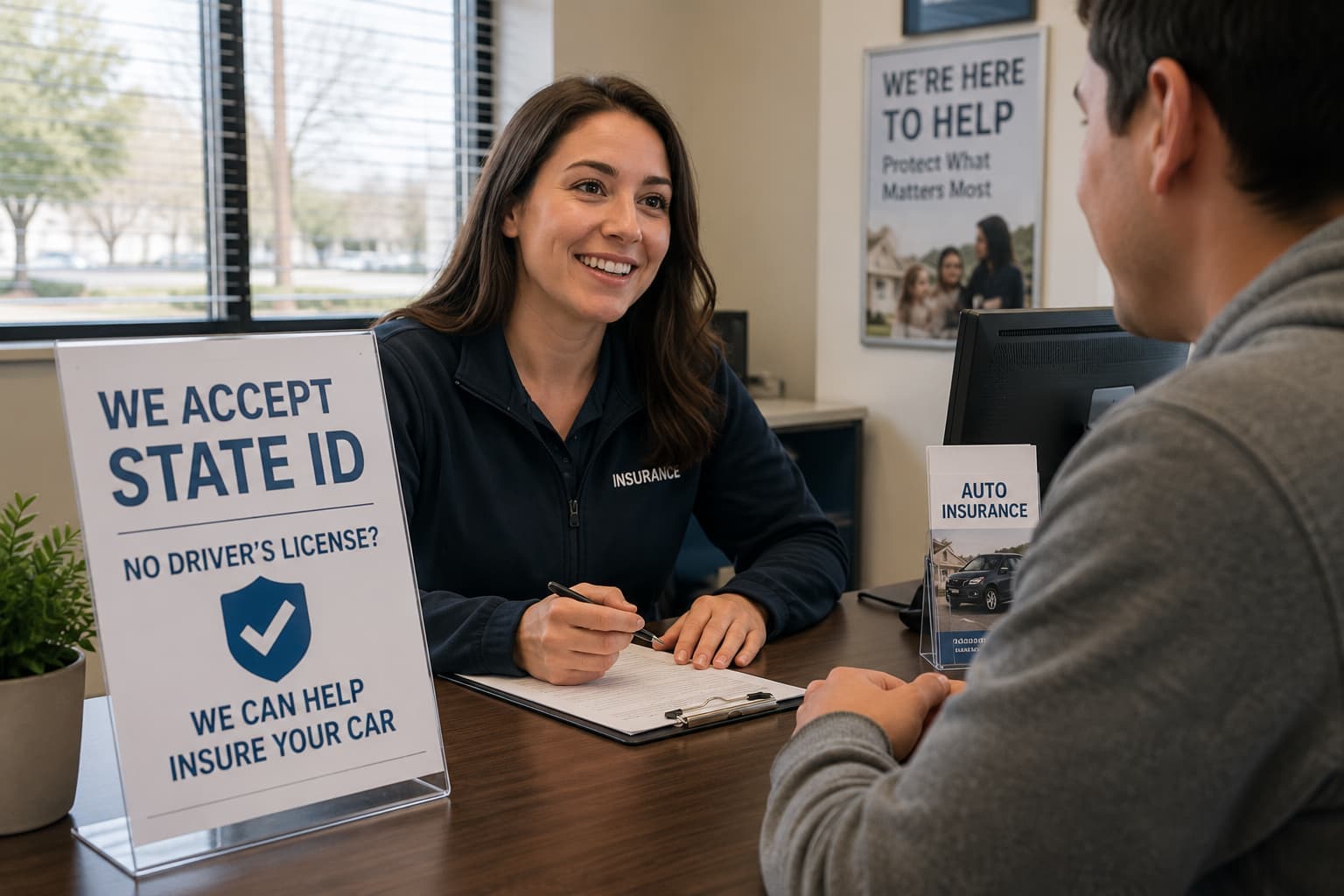
ID-only car insurance is simply a policy set up using your state-issued identification card instead of a driver’s license number. It’s the same non-driver ID that Oklahoma issues through the same office that handles licenses — the card a lot of people carry when they aren’t currently licensed to drive.
The reason this even needs a name comes down to how insurance applications are built. Most of them assume you’ll enter a license number, and when that field is blank, the whole quote grinds to a halt. An insurer that offers ID-only coverage has simply set up its process to accept a state ID in that spot instead. Nothing about the coverage itself is unusual — it’s real auto insurance that meets Oklahoma’s requirements. The only thing that changes is which piece of identification gets you through the door.
Who Needs an ID-Only Policy
If this is the first you’re hearing of ID-only coverage, it can sound like an edge case. It’s far more ordinary than that. Someone whose license lapsed and hasn’t renewed yet still owns a car that has to stay insured. Someone rebuilding toward reinstatement needs continuous coverage in the meantime so there’s no gap working against them later. And plenty of people simply hold a state ID rather than a license, yet still have a vehicle to protect.
The most common situation of all is owning a car that someone else drives. Picture a parent who no longer drives but keeps a vehicle for a licensed son or daughter to use, or a household where the car is titled to one person and driven by another. The car is registered in your name, so the insurance has to be too — and an ID-only policy lets you carry it as the owner even without a license of your own. The thread running through all of these is the same: a vehicle needs coverage, and the person arranging it doesn’t have a current license to put on the paperwork.
Insurance and a License Are Two Different Things
This is the part worth slowing down on, because confusing the two causes real problems. Insuring a car and being allowed to drive it are separate matters handled by separate systems. A policy proves financial responsibility for the vehicle — that if it’s involved in an accident, there’s coverage behind it. A license proves the state has cleared you personally to be behind the wheel.
An ID-only policy takes care of the first and says nothing about the second. So it keeps the car legally insured and protects you as the owner, but it does not hand you permission to drive. If your goal is to get back on the road yourself, getting properly licensed is still the step that does that. Coverage and licensing move on their own tracks, and an ID-only policy is you handling the coverage track while the licensing one catches up.
Meeting Oklahoma’s Coverage Requirement
Whichever way a policy is set up, Oklahoma expects the same baseline. Every registered vehicle has to carry at least the state liability minimum of 25/50/25 — $25,000 per person and $50,000 per accident for bodily injury, plus $25,000 for property damage. An ID-only policy meets those Oklahoma car insurance minimum requirements just like any other policy does. Using an ID instead of a license doesn’t lower the bar or change what the state asks for; it only changes how you start the application.
How to Actually Get a Quote
The real hurdle with ID-only coverage was never the price — it’s finding a company whose process doesn’t dead-end the moment it doesn’t see a license number. That single design choice is why so many unlicensed owners give up assuming coverage isn’t available to them.
An insurer that works with Oklahoma’s nonstandard drivers handles it differently. A quote that runs anonymously and in about a minute, with no phone call and no credit check, lets you see a real price based on your actual situation instead of getting stopped at the first field you can’t fill in. There’s no sales call waiting on the other side, so you can find out where you stand and take it from there on your own time.
How It Differs From a Non-Owner Policy
ID-only coverage is easy to mix up with a non-owner car insurance policy, but they’re built for nearly opposite situations. A non-owner policy is for someone who has a license but no car of their own, and needs liability coverage that follows them into borrowed or rented vehicles. ID-only coverage is the reverse: you have the car, but not the license. Sorting out which one describes you is worth a moment up front, because asking for the right policy from the start saves you from a quote built around the wrong problem.
Frequently Asked Questions
Can I get car insurance in Oklahoma without a driver’s license? Yes. ID-only car insurance lets you insure a vehicle using a state-issued identification card instead of a license number, which keeps coverage available when a standard application would stop at the missing license.
Does an ID-only policy let me drive legally? No. An ID-only policy insures the vehicle and proves financial responsibility, but it does not authorize you to drive. Licensing is a separate requirement handled through the state.
Why do standard insurers reject my quote without a license? Most national quote forms are built to require a license number and won’t proceed without one. An insurer set up for ID-only coverage accepts a state ID instead, which is why the process matters as much as the price.