
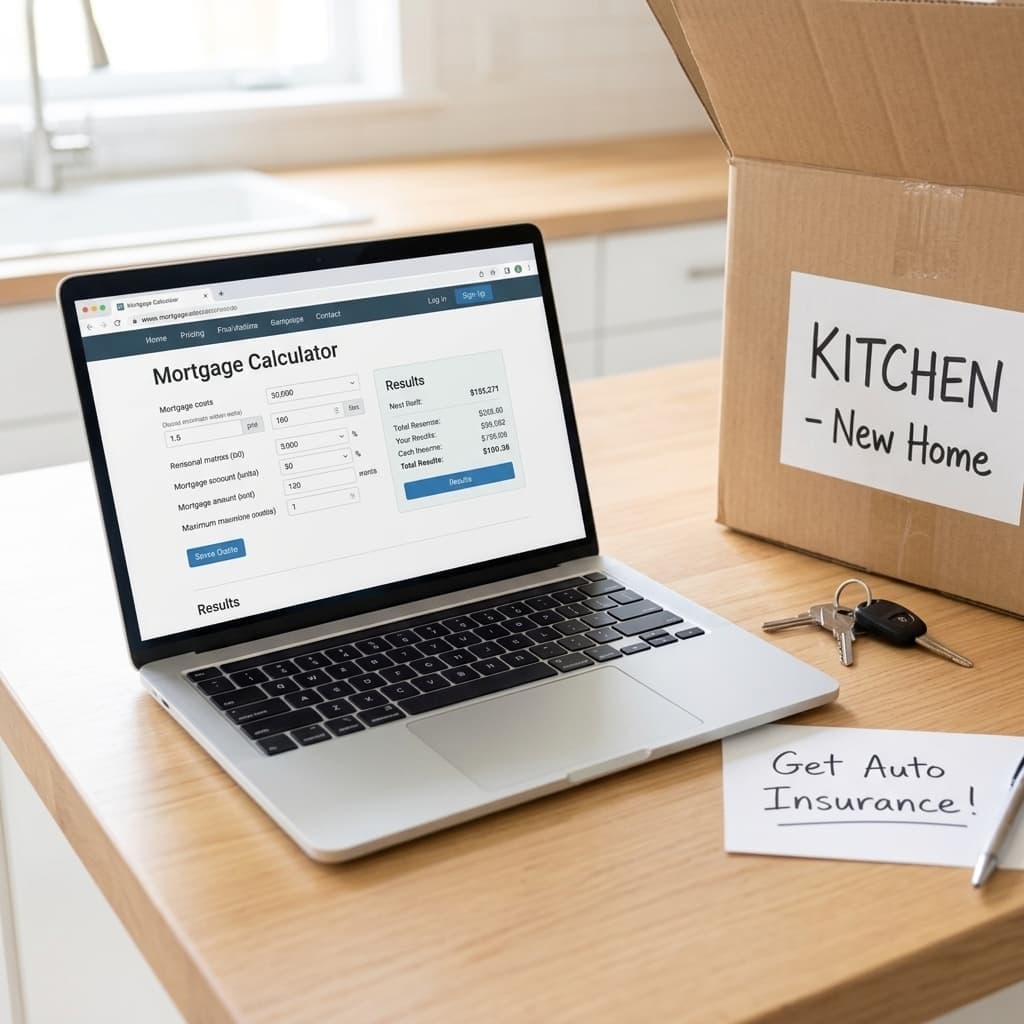
You’ve probably entered the numbers into a mortgage calculator more than once.
Purchase price.
Down payment.
Interest rate.
Property taxes.
Monthly payment.
You adjust the numbers until you finally find a payment that fits your budget.
Then closing day arrives.
Suddenly, you’re thinking about moving boxes, utility deposits, internet service, changing your address, and making your new house feel like home. With so much happening, it’s easy to forget about a bill you’ve already been paying every month.
Your car insurance.
A mortgage calculator is designed to estimate the cost of buying a home. It helps you understand what your mortgage payment may look like, but it doesn’t account for everything that changes after you move.
A new address.
A different commute.
A new place to park your vehicle.
Changes to your monthly budget.
Even who regularly drives your car.
Those details can all be worth reviewing with your insurance company. Before you settle into your new home, take a few minutes to make sure your auto insurance still matches your life after the move.
Buying a House Changes More Than Your Mortgage Payment
Buying a home is one of the biggest financial changes most people make.
The mortgage payment usually gets most of the attention, but it’s rarely the only expense that changes.
The first few weeks after moving often include costs like moving trucks, utility deposits, furniture, lawn equipment, paint, and repairs. Even small purchases can add up quickly.
When your budget suddenly has more demands, it’s easy for existing bills to get pushed into the background.
Car insurance shouldn’t be one of them.
A mortgage calculator can help you estimate what you’ll owe each month for your home. It can’t tell you how moving may affect the rest of your budget or whether your current insurance policy still reflects your new situation.
Your New Address Is More Than Just a Mailing Address
One of the first things you’ll do after moving is update your address.
You’ll probably notify your employer, your bank, the post office, and friends or family.
Your auto insurance company should be on that list too.
More importantly, make sure the address where your vehicle is primarily kept is accurate.
Insurance companies often use a garaging address as part of the information used to rate a policy. Whether your vehicle is now parked in a garage, a driveway, or on the street, your policy should reflect where it’s actually kept.
Even if you’ve only moved across town, keeping your policy up to date helps ensure your information is accurate if you ever need to file a claim.
Your Commute and Driving Habits May Have Changed
Moving into a new home often changes your daily routine.
Maybe you’re now closer to work.
Maybe your commute is longer than before.
Maybe you’ve started working from home and drive much less than you used to.
Those changes don’t automatically increase or decrease your insurance premium, but they are worth discussing with your insurance company.
Think about the information you provided when you first purchased your policy.
If your daily driving habits have changed since then, your policy should reflect those changes too.
Buying a house is a natural time to review those details.
Don’t Let Your New Mortgage Push Car Insurance to the Bottom of the Budget
The first mortgage payment can feel very different from the payment you estimated on a calculator.
By the time you’ve paid moving expenses, bought supplies for the house, and handled unexpected costs, your monthly budget may feel tighter than expected.
If that happens, don’t ignore your car insurance or make quick coverage decisions without reviewing your policy first.
If you own an older, paid-off vehicle, you may have different coverage options than someone with a financed vehicle.
If your vehicle is financed or leased, your lender will typically require comprehensive and collision coverage until the loan is paid off.
The goal isn’t automatically lowering or increasing your coverage.
It’s making sure your policy still fits both your vehicle and your new financial situation.
Before You Finish Moving, Review These Five Things
Before checking “move complete” off your list, take a few minutes to review your auto insurance.
Homebuyer’s Auto Insurance Checklist
✔ Update your address with your insurance company.
✔ Confirm where your vehicle is primarily parked.
✔ Review your commute and estimated annual mileage.
✔ Update any household drivers if your living situation has changed.
✔ Make sure your payment schedule still fits comfortably within your new monthly budget.
If you’re comparing insurance quotes after moving, compare policies with the same liability limits, deductibles, and coverages. Looking only at the monthly premium doesn’t always tell the whole story.
A Mortgage Calculator Is Only Part of the Budget
A mortgage calculator is one of the best tools available for estimating what a home may cost each month.
But buying a house changes more than one monthly payment.
It changes where you live, where you park your vehicle, how much you drive, and how your monthly budget comes together.
That’s why your car insurance deserves a quick review before or shortly after you move.
Most updates only take a few minutes, but they can help ensure your policy accurately reflects your new home and your new routine.
After all, the goal isn’t just to budget for the house.
It’s to make sure your entire budget still works once you’re living in it.
Frequently Asked Questions
**Does buying a house affect car insurance?**It can. A new address, different commute, where your vehicle is parked, and changes to your household may all be worth reviewing with your insurance company.
**Should I update my car insurance after moving?**Yes. Update both your mailing address and the address where your vehicle is primarily kept if they’ve changed.
**Does a mortgage calculator include car insurance?**No. Mortgage calculators typically estimate housing costs such as your mortgage payment, property taxes, and homeowners insurance. Auto insurance is a separate policy with its own coverage and billing.
**Can buying a house lower my car insurance?**Possibly, but it depends on your individual situation. Changes to your address, driving habits, vehicle storage, and other rating factors may affect your policy differently.