
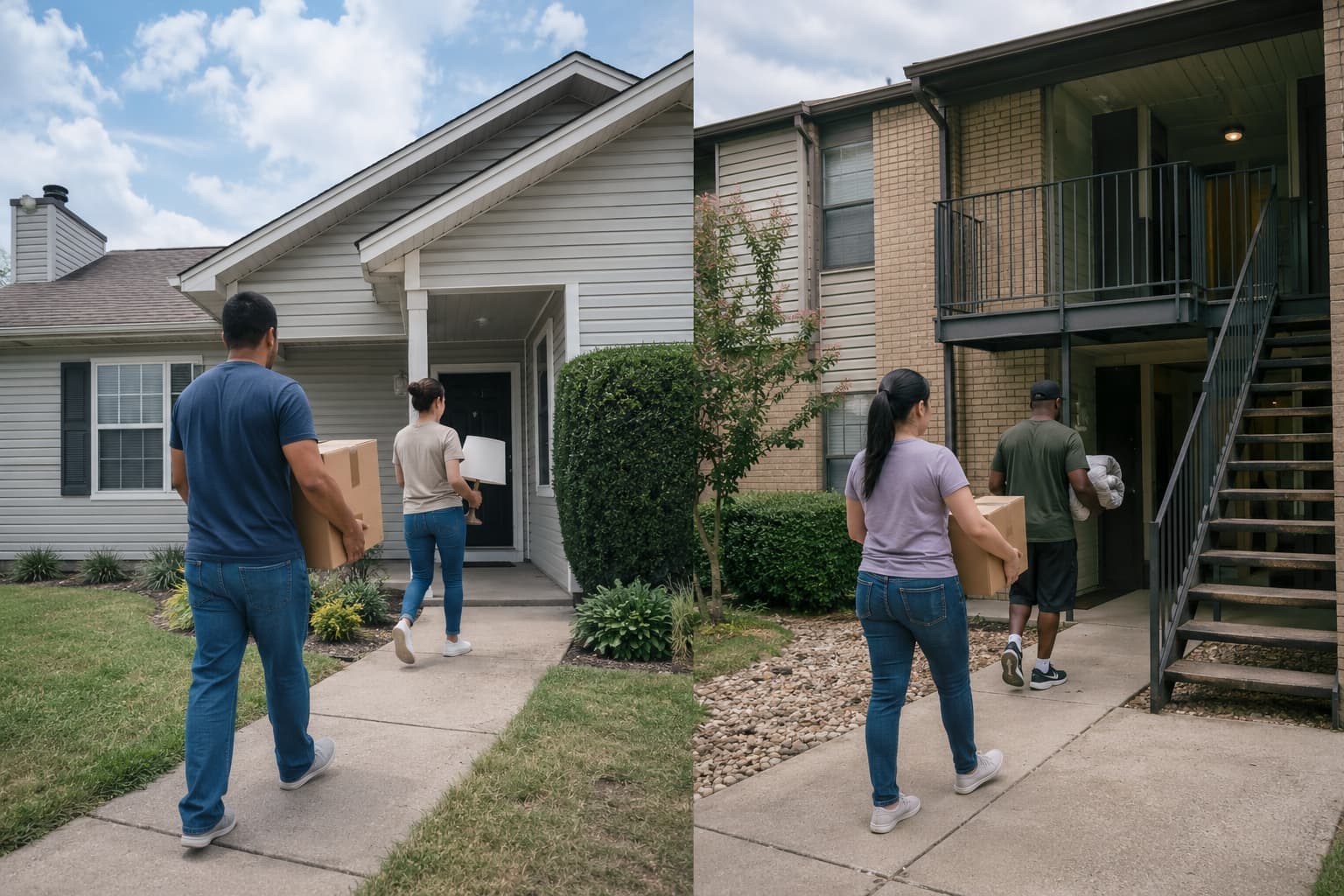
Moving from an apartment into a rented house can feel like a major upgrade. You may suddenly have a driveway, a backyard, extra bedrooms, a garage, or enough storage space to finally stop stacking boxes in a closet.
But does moving into a house mean you need a completely different type of renters insurance?
Usually, no.
Renters insurance is designed for people who rent their home, whether that’s an apartment, house, condo, or another type of rental. The basic split is similar: the property owner’s insurance generally covers the building, while renters insurance is designed around the tenant’s belongings, liability, and certain additional living expenses after a covered loss.
What can change quite a bit is what you own, where you keep it, and what you’re responsible for around the property.
That’s why renters insurance for a house deserves a fresh look even if you already had a policy for an apartment.
Is Renters Insurance Different for a House Than an Apartment?
The basic purpose is largely the same.
A renter in a one-bedroom apartment and a renter in a three-bedroom house may both have coverage for personal belongings, personal liability, and additional living expenses, depending on the policy. Renters insurance does not become homeowners insurance simply because the rented property happens to be a standalone house.
The more useful question is:
Has your living situation changed enough that the policy should be reviewed?
For someone moving into a house, the answer may be yes.
A house can mean more furniture, more storage space, outdoor belongings, a garage or shed, and different responsibilities under the lease. Those differences can affect the questions you should ask when reviewing renters insurance.
What Stays the Same in a House and an Apartment?
Whether you rent a house or an apartment, your landlord’s insurance generally isn’t there to replace your personal belongings after a covered loss.
The Oklahoma Insurance Department specifically notes that this distinction applies to people renting a house, condominium, or apartment: the landlord is responsible for the building, while the renter is responsible for protecting personal property.
That means the basic renters-insurance conversation is still about things such as:
- furniture
- clothing
- electronics
- kitchen items
- personal belongings
- liability if you’re responsible for certain injuries or property damage
- extra living expenses if a covered loss makes the rental unlivable
Those fundamentals don’t disappear when you trade an apartment key for the keys to a rented house.
What often changes is the scale of everything around them.
A Rented House Can Mean a Lot More Personal Property
Think about what fits inside a one-bedroom apartment.
You might have a couch, bed, television, laptop, kitchenware, clothing, and a few pieces of furniture.
Now imagine moving into a three-bedroom rental house.
Over the next year, you add:
- another bedroom set
- a dining table
- patio furniture
- a grill
- a lawn mower
- several power tools
- bicycles
- shelving for the garage
- decorations for rooms you didn’t have before
None of those purchases seems enormous by itself.
Together, they can make a noticeable difference in how much property you own.
That’s one reason moving from an apartment to a house is a good time to redo your home inventory instead of simply assuming the amount of personal-property coverage you previously chose still makes sense.
Picture the difference
Suppose you had roughly $18,000 worth of belongings in your apartment.
After moving into a house, you buy:
- $900 in patio furniture
- a $600 lawn mower
- $1,000 worth of tools
- a $500 grill
- $2,500 in additional furniture
You’ve added $5,500 worth of property without making a single unusually large purchase.
The policy may still say “renters insurance.”
But the amount of stuff you’re asking it to protect has changed.
Garage, Shed, and Outdoor Belongings Matter More in a House
An apartment renter might keep nearly everything inside the unit.
A house renter can have property spread across several places:
Inside the house: furniture, electronics, clothing and appliances.
In the garage: tools, bikes, sporting equipment and storage boxes.
In a shed: lawn equipment, gardening supplies and other belongings.
Outside: patio furniture, grills and other items.
That creates questions apartment renters may never have needed to ask.
For example:
Does your policy treat property stored in the garage the same way as property in the living room?
What about a detached shed?
Are there limits or exclusions that apply to certain types of expensive equipment?
How should you document belongings that aren’t kept inside the main house?
Renters policies can provide protection for personal possessions, and some policies extend protection to belongings away from the home as well. But the details, limits, covered causes of loss, and exclusions depend on the policy.
That’s why the practical move isn’t to assume that “it’s on the property, so it’s covered.”
Add the garage, shed, patio, and other storage areas to your home inventory and check how the policy treats the belongings you keep there.
Liability Can Look Different When You Rent a House
The liability part of renters insurance doesn’t suddenly become a different type of coverage because you rent a house.
But the setting can create different situations.
An apartment renter may spend most of their time inside the unit, with perhaps a balcony or small patio.
A house renter could regularly have guests using:
- the front porch
- steps
- a driveway
- a deck
- a backyard
- outdoor furniture
- recreational areas
Imagine you’re having friends over for a cookout and someone gets hurt in the backyard.
Or a visitor is injured around something you’re responsible for.
Renters policies commonly include liability protection for certain claims involving bodily injury or property damage caused by the policyholder’s negligence, subject to policy terms and limits.
That doesn’t mean renting a house automatically means you need a particular liability limit.
It does mean you may have more private space where guests spend time, which makes liability worth reviewing instead of simply renewing an old apartment policy without looking at it.
A House Lease May Give You More Responsibilities
One of the biggest day-to-day differences between renting an apartment and renting a house may have nothing to do with insurance at first.
It may be the lease.
In an apartment, management might handle most exterior upkeep.
With a rental house, the lease could make the tenant responsible for certain tasks such as lawn care, replacing filters, keeping parts of the property clean, or handling other routine upkeep.
The exact responsibilities depend on the rental agreement.
This is where two documents need to stay separate:
Your lease tells you what the landlord expects you to do.
Your renters policy tells you what the insurance covers.
Being responsible for maintaining something under the lease doesn’t automatically mean your renters policy will pay if that part of the property is damaged.
When moving into a rented house, it’s worth reading those documents side by side.
If the lease says you’re responsible for something you don’t understand from an insurance standpoint, ask about it rather than assuming one document answers the other.
The Landlord Still Insures the House Itself
A rented house can create an odd feeling.
You’re using the whole building. Nobody lives above or below you. You mow the lawn. You park in the driveway. You may even handle small maintenance tasks.
It can start to feel a little like homeownership.
From an insurance standpoint, though, you’re still renting the property.
The landlord’s property insurance generally applies to the building itself, while renters insurance is intended to protect the tenant’s interests rather than insure the structure as though the tenant owned it.
Imagine a covered fire damages the kitchen.
The cabinets, walls, and parts of the building belong to the property owner.
But your table, television, clothing, cookware, and other personal belongings belong to you.
One event can therefore create separate questions about damage to the landlord’s property and damage to yours.
Renting the entire house doesn’t transfer ownership of the structure to you.
What If the House or Apartment Becomes Unlivable?
This is one area where the basic concept remains very similar.
If a covered loss makes your rented home temporarily uninhabitable, a renters policy may include additional living expense coverage that helps with eligible costs of living somewhere else while repairs are being made.
That can apply whether the damaged rental is an apartment or a house, subject to the policy.
The important part is not assuming the landlord will automatically cover every expense you incur because you can’t stay there.
If you’re comparing policies, look at how additional living expenses are handled and what limits apply.
A family moving from a small apartment into a larger rental house may also want to think realistically about what temporary housing would look like for their household.
Finding temporary space for one person is different from finding temporary accommodations for a family, pets, and everything that comes with them.
Is Renters Insurance More Expensive for a House Than an Apartment?
Not necessarily.
Renting a house instead of an apartment does not automatically tell you what a renters insurance policy will cost. Pricing depends on the insurer, the policy, and the coverage selected.
The more important difference is what you may need to review after moving.
A rented house can give you more room for furniture, tools, lawn equipment, patio items, and belongings stored in a garage or shed. Even if you’re still buying the same type of renters insurance, it makes sense to take another look at what you own and whether your current coverage still reflects it.
The house-versus-apartment difference is less about assuming a certain price and more about making sure the policy fits your new living situation.
Moving From an Apartment to a House? Review These Before You Carry Over the Old Policy
It’s easy to treat a move as nothing more than an address update.
But if you’re going from an apartment into a rental house, use the move as an excuse to look at the policy again.
Start with the new home itself.
Recount what you own
Don’t assume the personal-property amount you chose years ago still reflects your belongings.
Walk through the house, garage, shed, closets, and outdoor areas and update your home inventory.
Look at where everything is stored
Pay particular attention to tools, bicycles, lawn equipment, patio furniture, grills, and other belongings you didn’t have—or didn’t have room for—in the apartment.
Read the lease
Find out what you’re responsible for around the house and property.
If something in the lease raises an insurance question, ask before assuming it’s covered.
Think about how guests use the property
A yard, deck, porch, driveway, pet, pool, trampoline, or other feature may give you new liability questions that weren’t relevant in your previous apartment.
Review the actual policy limits
Don’t carry over the old numbers simply because renewing them is easy.
Look at your current belongings and living situation first.
Update the address correctly
Make sure the insurer knows where you actually live and that the policy information accurately reflects the new rental.
A renters policy written around your old apartment shouldn’t simply be forgotten after the moving truck leaves.
A House Gives Renters More Space—and More to Think About
Renters insurance isn’t only for apartments.
If you rent a house, you’re still a renter, and the same basic insurance concepts generally follow you: your belongings are yours to protect, the landlord generally handles insurance on the building, and your policy may also provide liability and additional-living-expense protection.
The difference is what life in the rental actually looks like.
A house may mean another bedroom full of furniture. It might mean tools in the garage, a lawn mower in the shed, furniture on the patio, guests in the backyard, or new responsibilities written into the lease.
That’s why moving from an apartment to a house deserves more than changing the address on an old policy.
Look at what you own now, where you keep it, and how you’re using the property. Then make sure the renters insurance you’re reviewing reflects the home you’re actually renting—not the apartment you moved out of.
Frequently Asked Questions
Can you get renters insurance for a house?
Yes. Renters insurance isn’t limited to apartments. It can be used by people renting houses, apartments, condos, and other rental homes.
Is renters insurance different for a house and an apartment?
The basic types of protection can be similar, but the renter’s needs may differ. Someone renting a house may own more property, use a garage or shed, have more outdoor space, or have different responsibilities under the lease.
Does renters insurance cover a garage or shed at a rented house?
Renters insurance is designed to cover personal property rather than the landlord’s building or structures. How belongings stored in a garage, shed, or other area are covered depends on the policy, limits, exclusions, and cause of loss. Check the policy rather than assuming all property on the premises is treated identically.
Does renters insurance cover the actual house I’m renting?
Generally, renters insurance is not designed to insure the house itself as though the tenant owned it. The landlord’s insurance generally covers the building, while renters insurance focuses on the tenant’s belongings, liability, and other covered renter expenses.
Do I need to change renters insurance when moving from an apartment to a house?
At minimum, the policy information needs to reflect the new residence. A move is also a good opportunity to update your home inventory and review your personal-property limits, liability coverage, deductible, and any questions created by the new property.