Sometimes the problem isn’t the amount of your car insurance bill.
It’s the timing.
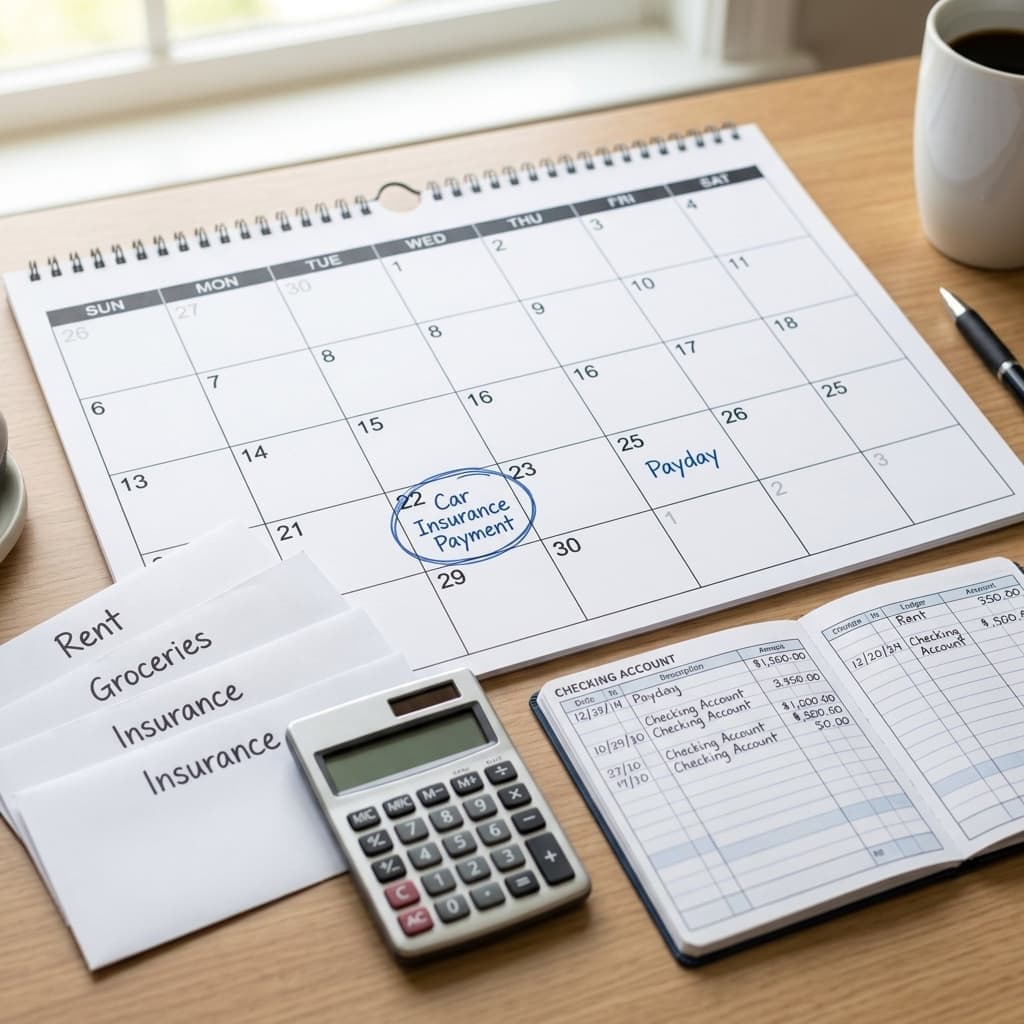
Your paycheck arrives on Friday.
Your insurance payment is due on Tuesday.
You know the money is coming—you just don’t have it yet.
That situation is more common than many people realize. The bill isn’t necessarily unaffordable. It simply arrives before your paycheck does.
If that happens month after month, the goal isn’t scrambling to find the money every time your premium is due. The goal is building a plan so the due date stops catching you off guard.
The Problem Isn’t the Bill. It’s the Gap Between Paychecks.
When your insurance payment comes before payday, it can feel like you’re constantly trying to catch up.
The frustrating part is that you’re often only a few days short. If the due date were a week later, you could pay it without thinking twice.
Unfortunately, insurance companies don’t schedule billing around your paycheck.
That’s why the solution usually isn’t waiting for the next payday.
It’s planning for the payment with the previous one.
Pay Next Month’s Insurance With This Month’s Paycheck
One of the easiest budgeting habits is also one of the most effective.
Instead of thinking:
“I’ll pay my insurance when I get paid.”
Start thinking:
“Part of this paycheck is already for next month’s insurance.”
For example, if your premium is $160 each month, you could:
- Set aside $80 from each biweekly paycheck.
- Save $40 each week if you’re paid weekly.
- Move a portion of every paycheck into a separate account until the due date arrives.
By the time your payment is due, the money is already waiting.
You’re no longer hoping payday comes first.
Keep the Insurance Money Separate
The hardest part isn’t usually saving the money.
It’s keeping it from getting spent on something else.
Gas.
Groceries.
Fast food.
Streaming services.
Small purchases throughout the month can quietly eat into the money you planned to use for insurance.
Keeping those funds separate can make a big difference.
Some people use a savings account. Others prefer a second checking account, an envelope budgeting system, or a budgeting app with labeled savings buckets.
The method isn’t nearly as important as making sure the insurance money doesn’t blend into everyday spending.
Ask About Changing Your Due Date Before You Miss It
If your payment is consistently due before payday, contact your insurance company before it becomes a late payment.
Some insurers may allow you to change your billing date or payment schedule. Others may only make changes when your policy renews.
Even if the due date can’t be changed, it’s still worth asking:
- Is there a grace period?
- When would the policy actually cancel?
- Can you make a manual payment instead of using automatic draft?
- Are there different payment plan options available?
The Consumer Financial Protection Bureau explains that consumers can often change or stop automatic payment authorizations by contacting the company. With insurance, however, it’s important to make sure any billing changes keep your policy active and your payments on schedule.
Know What Happens if a Payment Doesn’t Go Through
Life happens.
Sometimes a payment fails because there wasn’t enough money in the account.
Sometimes a debit card expires.
Sometimes the wrong bank account is connected.
Whatever the reason, don’t ignore the notice.
A missed payment can eventually lead to cancellation if it isn’t corrected within the time allowed by your insurance company.
If your vehicle is financed or leased, losing required coverage may create additional problems with your lender. According to the National Association of Insurance Commissioners (NAIC), some lenders may purchase force-placed insurance to protect their financial interest if required coverage lapses. That coverage is often more expensive and protects the lender—not necessarily you.
If you think you’re going to miss a payment, contact your insurance company before the due date whenever possible.
Set Reminders That Match Your Pay Schedule
Many people set a reminder on the day their insurance payment is due.
By then, it’s often too late.
A better reminder happens on payday.
That’s when you still have time to move money before it gets spent somewhere else.
Consider setting reminders for:
- Payday: Set aside money for your next insurance payment.
- One week before the due date: Verify the money is still available.
- Two days before the payment drafts: Double-check your payment method and account balance.
Those small reminders can prevent unnecessary stress later in the month.
If the Payment Is Still Too High, Review Your Policy
Sometimes the issue isn’t just the timing.
The premium itself may be stretching your budget.
Before reducing coverage, ask your insurance company about options that may better fit your situation.
You might qualify for discounts, different payment plans, or deductible changes that lower your premium.
If your vehicle is paid off, liability-only coverage may be worth discussing depending on the value of your vehicle and your personal situation.
If your vehicle is financed or leased, your lender will typically require comprehensive and collision coverage until the loan is paid off.
The goal isn’t simply finding the cheapest policy.
It’s finding coverage that fits both your budget and your needs.
Sometimes the Best Solution Isn’t a Lower Bill
The hardest car insurance payment usually isn’t the biggest one.
It’s the one that’s due before payday.
Fortunately, that’s often a budgeting problem—not an insurance problem.
Setting aside money from each paycheck, keeping those funds separate, asking about billing options, and reviewing your policy before the due date can make each month much more manageable.
Sometimes the biggest improvement isn’t lowering your insurance bill.
It’s making sure your paycheck and your due date finally work together.
Frequently Asked Questions
What should I do if my car insurance is due before payday?
Contact your insurance company before the due date to ask about billing options, then begin setting aside part of each paycheck for your next premium instead of waiting until the payment is due.
Can I change my car insurance due date?
Some insurance companies allow billing-date changes or different payment schedules, while others only make changes at renewal. Contact your insurer to see what options are available.
Is it better to split the bill myself?
For many people, yes. Saving a portion of each paycheck can make one monthly insurance payment easier to manage and reduce the chance of coming up short before payday.
What happens if my car insurance payment fails?
A failed payment can eventually lead to policy cancellation if it isn’t corrected within the allowed time. Contact your insurance company immediately to understand your deadline and available payment options.