
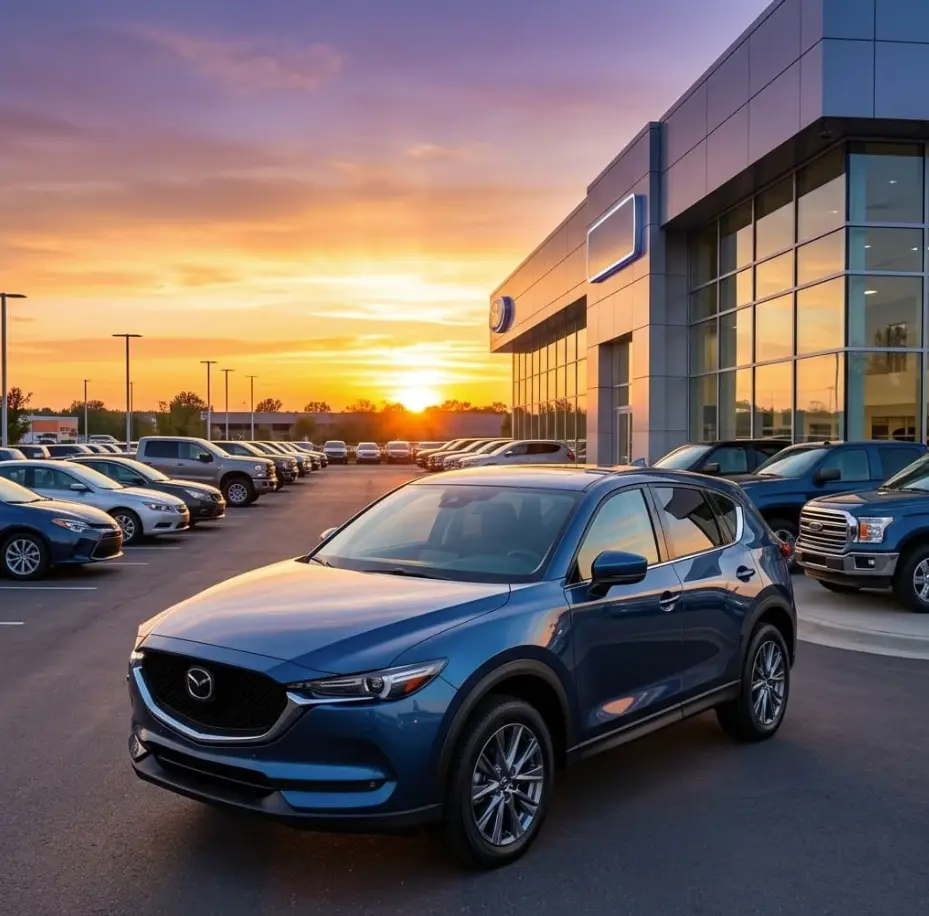
Shopping for your next vehicle isn’t just about finding the right purchase price or monthly payment. One of the biggest long-term ownership costs is auto insurance, and the vehicle you choose can make a noticeable difference in what you pay.
Insurance companies evaluate much more than a vehicle’s value. They also consider repair costs, safety ratings, theft rates, replacement parts, and historical claims data. Vehicles that perform well in these areas often receive more competitive insurance rates than models that are expensive to repair or are involved in more costly claims.
While no vehicle guarantees the lowest premium, the five models below are consistently recognized for having characteristics that can help keep insurance costs lower.
| Vehicle | Body Style | Why It’s Often Less Expensive to Insure |
|---|---|---|
| Honda CR-V | Compact SUV | Excellent safety ratings, affordable repairs, and widely available replacement parts |
| Subaru Outback | Wagon / SUV | Outstanding crash-test performance and advanced safety technology |
| Toyota Corolla | Compact Sedan | Reliable, inexpensive to repair, and lower overall ownership costs |
| Mazda CX-5 | Compact SUV | Strong safety scores with moderate repair expenses |
| Subaru Forester | Compact SUV | Practical design, advanced safety features, and strong claims history |
Honda CR-V: A Practical SUV That Keeps Insurance Costs in Check
The Honda CR-V has become one of America’s best-selling compact SUVs, and it’s also one of the vehicles that frequently receives competitive insurance rates.
One reason is its excellent reputation for safety. The Honda CR-V has consistently earned strong ratings in crash tests conducted by the Insurance Institute for Highway Safety (IIHS), which can help reduce the severity of insurance claims. It also benefits from reasonable repair costs and readily available replacement parts, making it less expensive to fix after many common accidents than some larger SUVs or luxury vehicles.
Many newer CR-V models also include advanced driver-assistance features such as automatic emergency braking, collision mitigation systems, and lane-keeping assistance. While these features don’t automatically lower every driver’s premium, vehicles equipped with modern safety technology are often viewed more favorably by insurers.
For drivers looking for a dependable family SUV without unusually high insurance costs, the Honda CR-V continues to be one of the strongest options.
Subaru Outback: Safety Technology Helps Keep Premiums Competitive
The Subaru Outback has built its reputation around safety, versatility, and year-round drivability.
Many Outback models include Subaru’s EyeSight® Driver Assist Technology, along with features such as adaptive cruise control, lane departure warning, and pre-collision braking. Vehicles equipped with proven safety systems often experience fewer severe insurance claims, which can contribute to more favorable insurance pricing over time.
The Outback also avoids many characteristics that commonly increase premiums, such as high-horsepower engines or luxury repair costs. Instead, it’s designed for practical, everyday driving, making it an attractive choice for drivers who want capability without significantly increasing insurance expenses.
Toyota Corolla: Affordable to Own and Often Affordable to Insure
For decades, the Toyota Corolla has earned a reputation as one of the most dependable vehicles on the road.
Its reliability benefits insurance companies as well. Replacement parts are plentiful, repair costs are generally reasonable, and the Corolla has historically demonstrated strong crash performance. Those factors often result in claims that cost less to settle compared to many other vehicles.
The Corolla also appeals to a broad range of drivers looking for dependable transportation rather than high-performance driving. Combined with its long history of reliability, it continues to be one of the vehicles most commonly associated with lower insurance costs.
Mazda CX-5: Modern Features Without Luxury-Level Insurance Costs
The Mazda CX-5 delivers many of the premium features drivers want while maintaining insurance costs that are often more affordable than luxury SUVs.
Excellent crash-test ratings, advanced safety systems, and moderate repair costs all contribute to its insurance-friendly reputation. It also avoids many of the expensive replacement parts and specialized repairs that can increase premiums on higher-end vehicles.
If you’re looking for an SUV that offers upscale styling without the higher insurance costs that sometimes accompany luxury brands, the Mazda CX-5 deserves a closer look.
Subaru Forester: Built for Everyday Driving and Lower Insurance Risk
The Subaru Forester is another compact SUV that consistently appears among vehicles with competitive insurance premiums.
Excellent visibility, standard all-wheel drive, and advanced safety technology help make the Forester a practical vehicle for commuters and families alike. It also performs well in independent crash testing and has a long history of prioritizing occupant safety.
Insurance companies evaluate vehicles based on years of claims experience, not just individual accidents. Because the Forester has consistently demonstrated characteristics associated with lower claim severity, it often receives more favorable insurance pricing than many vehicles in the same category.
Why These Vehicles Often Receive Lower Insurance Rates
Although these five vehicles come from different manufacturers, they share many of the same qualities that insurance companies generally favor.
These characteristics include:
- Excellent crash safety ratings
- Moderate repair and replacement costs
- Widely available replacement parts
- Lower rates of expensive insurance claims
- Advanced driver-assistance technology
- Practical designs intended for everyday driving
- Strong long-term reliability
Vehicles that combine these characteristics are often less expensive to insure than sports cars, luxury vehicles, high-performance models, or vehicles with costly repairs.
Choosing the Right Vehicle Can Lower Your Long-Term Ownership Costs
If keeping your insurance premium affordable is one of your priorities, the vehicle you purchase matters just as much as the insurance company you choose.
Before buying your next vehicle, consider requesting insurance quotes on several models you’re interested in — ideally before you drive off the lot. Comparing premiums ahead of time can help you understand the total cost of ownership — not just the purchase price or monthly payment.
A vehicle that’s known for lower insurance costs, combined with quotes from multiple insurance companies, can help you find coverage that fits both your budget and your driving needs.
Price Your Shortlist Before You Sign Anything
Narrowed it down to two or three models? Quote them all in a few minutes and let the premiums break the tie. Cheapest Auto Insurance is a Tulsa-based agency with multiple options to fit your budget — real prices on the exact vehicles you’re considering, no pressure.
Start your free quote online in about a minute, or call or text a local agent at (800) 988-3794.
Frequently asked questions
Which vehicles typically cost the least to insure?
The Honda CR-V, Subaru Outback, Toyota Corolla, Mazda CX-5, and Subaru Forester are consistently recognized for characteristics that can help keep insurance costs lower, such as strong crash-test ratings, moderate repair costs, and widely available replacement parts.
Why do some vehicles cost less to insure than others?
Insurance companies evaluate repair costs, safety ratings, theft rates, replacement-part availability, and historical claims data. Vehicles that perform well in these areas often receive more competitive insurance rates than models that are expensive to repair or involved in more costly claims.
Do advanced safety features automatically lower my insurance premium?
Not automatically. Features like automatic emergency braking and lane-keeping assistance don’t guarantee a lower premium for every driver, but vehicles equipped with modern safety technology are often viewed more favorably by insurers because they can reduce the severity of claims.
What kinds of vehicles are usually the most expensive to insure?
Sports cars, luxury vehicles, high-performance models, and vehicles with costly or specialized repairs generally cost more to insure because their claims tend to be more expensive to settle.
Should I get insurance quotes before buying a car?
Yes. Requesting insurance quotes on several models you’re considering shows you the total cost of ownership — not just the purchase price or monthly payment — and can prevent an unpleasant surprise after you’ve already signed.
Does the insurance company I choose matter as much as the vehicle?
Both matter. Even on the same vehicle with the same coverage, insurance companies can quote very different premiums, so comparing quotes from multiple companies is still one of the most effective ways to lower your rate.