
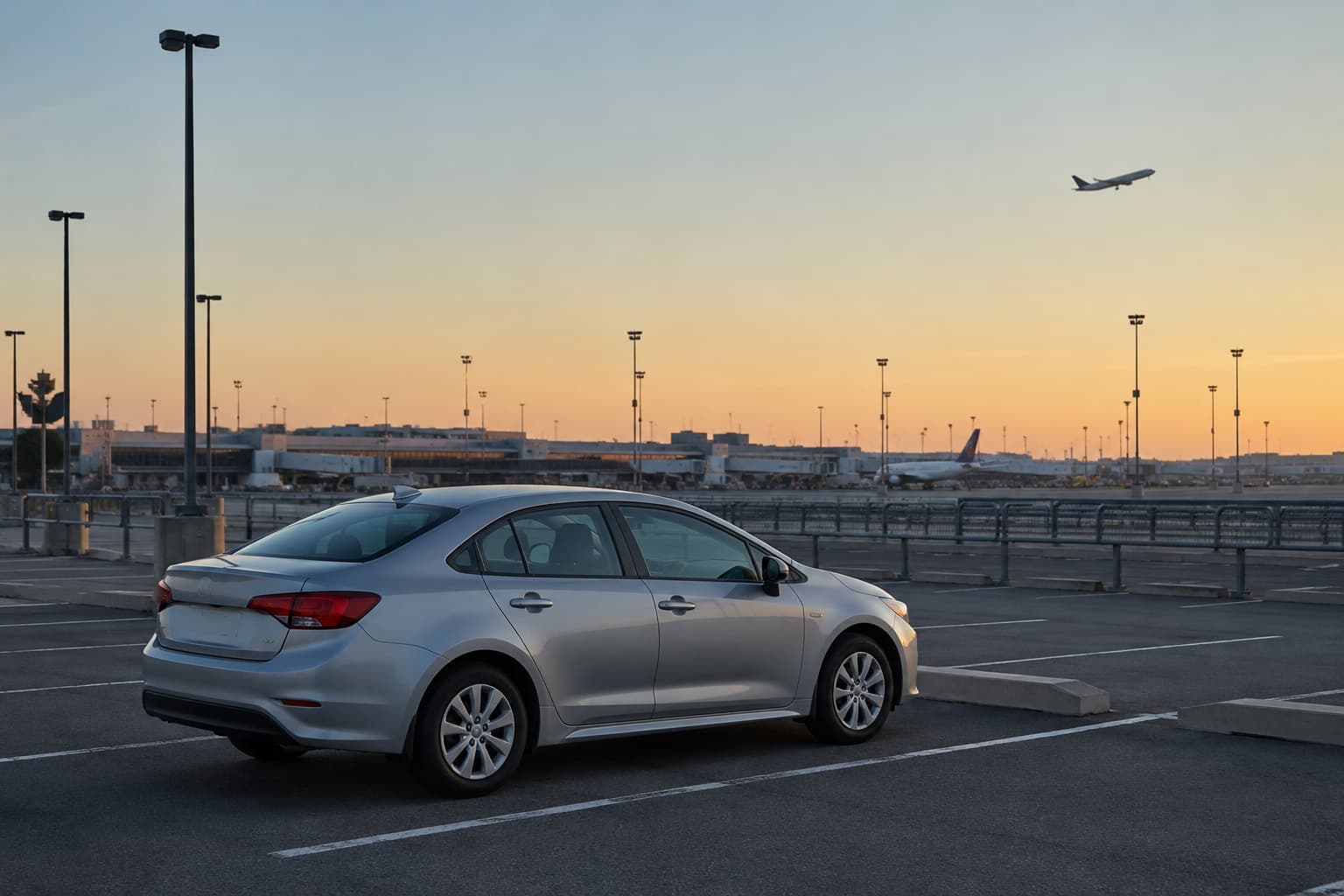
You’re packed, your travel plans are set, and your car may be sitting at home or in an airport parking lot for several days.
If you won’t be driving, it’s fair to wonder whether your car insurance still matters while you’re away.
For most short trips, your policy doesn’t automatically pause just because you’re traveling. The car may be parked, but it can still be damaged, stolen, or involved in an incident while you’re gone.
That’s why it helps to know what stays in effect during your trip—and what you may want to check before leaving for your Expedia flight.
Your Flight Doesn’t Automatically Pause Your Car Insurance
Booking a flight through Expedia doesn’t automatically pause, reduce, or change your auto insurance.
For most short trips, your policy continues just as it would if you were at home.
That’s important because a parked car can still be exposed to things that have nothing to do with everyday driving. Hail can damage a car in a driveway. A vehicle can be stolen from a parking lot. Another driver can hit a parked car.
Whether insurance would help depends on what happened and the coverage on the vehicle.
Liability coverage generally helps pay for covered injuries or property damage you’re responsible for causing to other people, up to your policy limits. It generally isn’t designed to repair your own vehicle after theft, hail, vandalism, or an at-fault collision.
Comprehensive and collision coverage serve different purposes. Comprehensive generally applies to certain non-collision losses, while collision generally applies to covered damage involving a collision with another vehicle or object.
If you carry liability-only insurance, that doesn’t mean you need to change your policy just because you’re taking a trip. It simply helps to know what your existing coverage is designed to do while the car is parked.
Should You Cancel Car Insurance While You’re on Vacation?
If you’re going to be away for a week or two, canceling your insurance may seem like an easy way to avoid paying for coverage while you aren’t driving.
For a short vacation, though, there are a few things to consider before making that change.
In Oklahoma, registered vehicles are generally subject to the state’s auto insurance requirements. Oklahoma’s minimum liability limits are 25/50/25, meaning $25,000 for bodily injury to one person, $50,000 for bodily injury per accident, and $25,000 for property damage.
Being out of town doesn’t automatically change those requirements.
A cancellation can also create a lapse in your insurance history. Depending on the insurer and situation, a lapse may affect your options or price when you purchase coverage again.
There is another consideration if the vehicle is financed or leased. Your lender or leasing company may require certain coverage to remain on the vehicle even when you aren’t driving it.
If required coverage lapses, the lender may have the right under the loan agreement to purchase insurance protecting its interest in the vehicle and charge you for it. This is commonly called force-placed insurance.
For a normal vacation, keeping your existing policy active is usually much simpler than canceling it for a short period and starting coverage again when you return.
What If Your Car Is Parked at Home?
If your car will stay at home while you’re away, think about who will have access to it.
A spouse, relative, roommate, or friend might need to move the vehicle, take it somewhere, or use it unexpectedly.
How coverage applies when another person drives your car can depend on the driver, whether they had permission, whether they live in your household, and the terms of your policy.
If you know someone may drive the vehicle while you’re away, it’s worth checking how your policy treats that driver before leaving the keys behind.
There are also a few simple things you can do before your trip:
- Park in a secure place when possible.
- Lock the doors and close the windows.
- Remove valuables from view.
- Keep the keys somewhere secure.
- Make sure anyone who may need the car knows where to find proof of insurance.
None of those steps change your coverage. They simply make it easier to leave the car behind without creating unnecessary problems.
What If You Leave Your Car at the Airport?
Airport parking is a little different because the vehicle may be sitting in a large public lot or garage for several days.
Before walking into the terminal, consider taking a few photos of the car.
Photograph the vehicle from several angles and capture the parking space number, garage level, or nearby signs. Keep your parking receipt or reservation confirmation as well.
Those records don’t guarantee that an insurance claim will be covered, but they can help document where the vehicle was parked and what condition it was in before your flight.
It’s also a good idea not to leave valuables, house keys, travel documents, or other sensitive items visible inside the car.
If you return from your Expedia trip and find damage, having that basic documentation can give you a clearer place to start.
A Quick Insurance Check Before Your Expedia Flight
You don’t need to turn vacation planning into a major insurance review.
A few quick checks can help you avoid surprises while you’re away:
- Confirm your policy will remain active through your return date.
- Check whether an insurance payment or renewal is due during the trip.
- Make sure your autopay or payment information is current.
- Know which coverages are currently on the vehicle.
- If the car is financed or leased, keep any lender requirements in mind.
- Think about whether anyone else may drive the car while you’re gone.
- Keep current proof of insurance and your insurer’s contact information somewhere accessible.
- Take photos if you’re leaving the car in airport or long-term parking.
The goal isn’t to automatically buy more coverage before a vacation.
It’s simply to know what you already have and make sure an ordinary trip doesn’t accidentally turn into an insurance lapse.
What About a Much Longer Trip?
A week-long vacation and storing a vehicle for several months aren’t quite the same situation.
If you’ll be away for an extended period and the car truly won’t be used, it may be worth asking your insurer whether there are options for a stored vehicle.
What is available can depend on the insurer, policy, registration, vehicle, and whether the car is financed or leased.
Before changing anything, ask what coverage would remain, whether the vehicle could be driven at all, and what would need to happen before putting it back on the road.
For an ordinary Expedia vacation, however, you generally don’t need to treat the car as though it’s going into long-term storage.
What If Someone Drives Your Car While You’re Away?
Leaving the car behind doesn’t always mean nobody will touch it.
Maybe your spouse will use it. Maybe a family member needs to move it. Maybe a friend is taking it to a repair shop while you’re gone.
Coverage can depend on who is driving, whether the person had permission, how the vehicle was being used, and the specific terms of your policy.
If you already know someone will be driving the car, check with your insurer if you’re unsure how that person is handled.
It’s a small question that’s easier to answer before your flight than after something happens.
What to Do If You Find Damage When You Return
Most people will come home and find their car exactly where they left it.
If you do notice new damage, start by documenting what you see.
If it is safe to leave the vehicle where it is, take photos of the damage and the surrounding area before moving it. Look for a note, paint transfer, broken vehicle parts, signs of forced entry, or other clues about what may have happened.
If the car was in airport parking, contact the parking operator and ask whether there is an incident-report process or relevant security footage.
For situations involving theft, vandalism, or a hit-and-run, contacting local law enforcement may also be appropriate.
Then contact your insurer and explain what you know.
Whether insurance applies will depend on the cause of the damage, the coverage you purchased, any applicable deductible, and the terms of the policy.
You don’t need to know exactly what happened before making the call. Start with the information you have and the documentation you collected.
Your Trip and Your Car Insurance Are Separate
An Expedia flight may change where you’ll be for a few days, but it doesn’t automatically change the insurance on the car you leave behind.
For a typical vacation, the useful approach is simple: make sure the policy stays active, check for any payments due while you’re away, and know what coverage is already on the vehicle.
If someone else may drive the car, make sure you understand how your policy handles that situation. If you’re leaving it at the airport, a few photos can give you a useful record of its condition.
Then you can focus on your trip instead of making unnecessary insurance changes for a car that will only be parked for a few days.
FAQ
Can I cancel my car insurance while I’m on vacation?
You can contact your insurer about canceling a policy, but a short vacation does not automatically remove insurance requirements associated with your vehicle. In Oklahoma, registered vehicles are generally subject to the state’s liability insurance requirements. A lender or leasing company may also require coverage to remain in place. Check those requirements before canceling insurance for a trip.
Does my car still need insurance if it’s parked while I’m away?
Simply parking your vehicle while you’re on vacation doesn’t automatically pause your insurance policy or applicable state requirements. Your existing policy generally continues according to its normal terms unless you make a change.
Does liability insurance cover damage to my parked car?
Liability insurance generally covers eligible injuries or property damage you’re responsible for causing to other people, subject to your policy limits. It generally does not repair your own car after events such as theft, hail, vandalism, or an at-fault collision.
Does comprehensive insurance cover a car parked at the airport?
Comprehensive coverage generally applies to certain non-collision losses such as theft, vandalism, hail, or fire. Whether a specific loss in an airport parking lot is covered depends on what happened and the terms, exclusions, and deductible of the policy.
What if someone drives my car while I’m on my Expedia trip?
Coverage can depend on who is driving, whether that person had permission, household status, how the car was being used, and your policy’s terms. If you know someone will use the vehicle while you’re gone, check with your insurer if you’re uncertain how the driver is covered.
Will my car insurance cost less if I don’t drive during my vacation?
Not automatically. A week or two without driving usually isn’t the same as a long-term change in annual mileage or vehicle use. If your overall driving habits change for a longer period, make sure the information on your policy remains accurate.