A Chase auto loan is not finished the moment you get approved. The loan, dealership paperwork, vehicle details, and insurance proof all have to match before the process is truly complete.
For most buyers, the insurance part is where things get confusing. You may know the payment amount and the vehicle you want, but the dealer or lender may still need proof that the car is insured correctly. The easiest way to avoid delays is to know when to call your insurance agent and what document to ask for.
Start With the Chase Loan Path
Chase Auto may be involved when you buy through a participating dealer, shop through Chase’s Auto marketplace, or refinance an existing auto loan. Chase’s Auto FAQ says buyers can purchase a new or used car, or lease a new car, from participating network dealers.
If you are buying from a dealer, Chase may send the approval details to that dealer. If you are refinancing, Chase’s refinance information says the process can include approval, documentation, payoff, and title updates. Either way, insurance proof becomes part of the file because the vehicle is tied to the loan.
Before you treat the deal as final, make sure you know who is financing the vehicle, whether Chase needs to be listed on the policy, and where proof of insurance should be sent.
Budget for Insurance Before You Sign
A car payment is only part of the cost of a financed vehicle. Chase’s car-loan preparation guide reminds buyers to include insurance, gas, maintenance, registration, and other ownership costs when deciding what they can afford.
That matters because a financed car often needs more than the cheapest legal policy. Liability coverage generally helps pay for injuries or property damage you cause to others, up to policy limits. It usually does not repair your own vehicle after an at-fault crash.
If the loan requires comprehensive and collision coverage, the insurance cost should be part of your decision before you sign. Drivers comparing a financed vehicle should understand how full coverage for a financed vehicle can change the real monthly cost.
Get the Insurance Quote Once You Have the VIN
Your insurance agent can give a rough estimate before you choose a car, but the final policy usually needs the VIN. The VIN helps the agent identify the exact vehicle being insured.
Have these details ready:
- The vehicle year, make, model, and VIN.
- The purchase or refinance date.
- The address where the car will usually be kept.
- The drivers who need to be listed on the policy.
- Any coverage or deductible requirements from the loan documents.
- The exact Chase lienholder information, if the dealer or Chase provides it.
If you are replacing a vehicle, tell the agent whether the old car is being traded, sold, or kept. If you are refinancing, tell the agent the lender is changing so the lienholder can be updated.
Make Sure the Policy Meets the Loan Requirement
Chase’s accidents and insurance FAQ says proper insurance coverage must be maintained throughout the loan or lease, even if the vehicle is not being driven, and tells customers to check their contract for the specific requirements.
For many financed vehicles, that usually means liability, comprehensive, and collision coverage. People often call this full coverage, but full coverage is not one official policy type. It is a common phrase for a policy that includes liability coverage plus physical damage coverage for your own vehicle.
Before sending proof, ask your agent to confirm:
- The policy includes the required coverages.
- The deductibles are within any lender limit.
- The effective date starts on or before the purchase or refinance date.
- The VIN is correct.
- Chase is listed as lienholder, loss payee, or additional interest if required.
Reading an auto coverage quote carefully before you buy can help catch missing coverage or a deductible problem while there is still time to fix it.
Ask for the Declarations Page
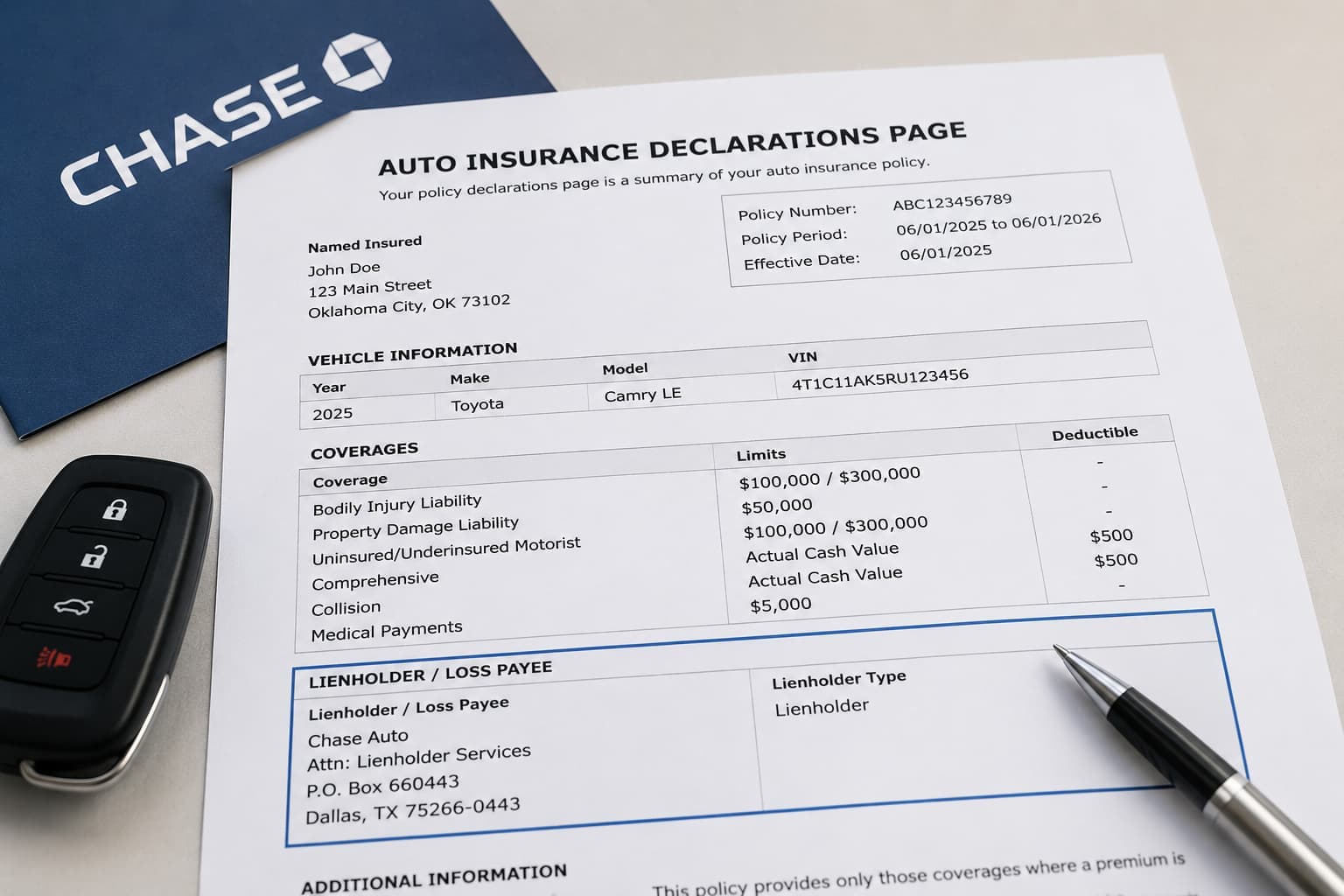
The declarations page is usually the best proof document to ask your agent for. An insurance ID card may show that you have a policy, but it often does not show enough detail for a lender.
A declarations page usually shows:
- The policyholder name.
- The policy number.
- The policy dates.
- The insured vehicle and VIN.
- The liability limits.
- Comprehensive and collision coverage, if included.
- The deductibles.
- The lienholder or loss payee information.
If Chase or the dealer needs proof, ask whether they want the declarations page, an insurance binder, an ID card, or another document. When in doubt, the declarations page is often the most useful because it summarizes the coverage in one place.
Do Not Treat CPI as a Normal Substitute
Collateral protection insurance, or CPI, sometimes comes up when a lender cannot verify required insurance or a borrower lets coverage lapse. Do not assume it is an optional shortcut instead of buying your own policy.
The Consumer Financial Protection Bureau explains that force-placed insurance may be obtained by a lender if the borrower does not get required insurance or lets insurance lapse. The CFPB also notes that this kind of insurance protects the lender, not the borrower, while the borrower may still be charged for it.
If Chase sends an insurance notice or mentions CPI, contact Chase and your insurance agent quickly. Ask what proof is missing, whether the declarations page needs to be resent, and whether any policy information needs to be corrected.
Keep the Process Simple
The Chase auto loan process is easier when each document lines up with the next one. The loan identifies the vehicle and lender. The insurance policy shows the coverage. The declarations page proves the key details.
Before closing, get the VIN, ask for the exact lienholder information, call your agent, and request the declarations page. Then check the proof before it is sent. That simple order can prevent a dealership delay or a lender notice after the loan starts.
FAQ Section
When Do I Need Insurance During the Chase Auto Loan Process?
You may need proof of insurance before the dealer finalizes the sale and loan paperwork. It is best to start the quote once you have the VIN and expected purchase date.
Does Chase Require Full Coverage on a Financed Car?
Chase says proper insurance coverage must be maintained throughout the loan or lease and tells customers to check their contract. Many financed vehicles require liability, comprehensive, and collision coverage, but your loan documents control the exact requirement.
What Proof of Insurance Should I Send for a Chase Auto Loan?
The declarations page is usually the most useful proof because it shows the vehicle, VIN, coverage, deductibles, policy dates, and lienholder information. Follow any specific instructions from Chase or the dealer.
Does Chase Need to Be Listed as Lienholder?
If Chase is financing the vehicle, the policy may need to list Chase as lienholder, loss payee, or additional interest. Ask the dealer or Chase for the exact wording and address to give your insurance agent.
Is CPI the Same as Regular Car Insurance?
No. CPI or force-placed insurance is generally tied to a lender’s need to protect its interest when required insurance is missing or cannot be verified. It should not be treated as a replacement for a normal auto policy.