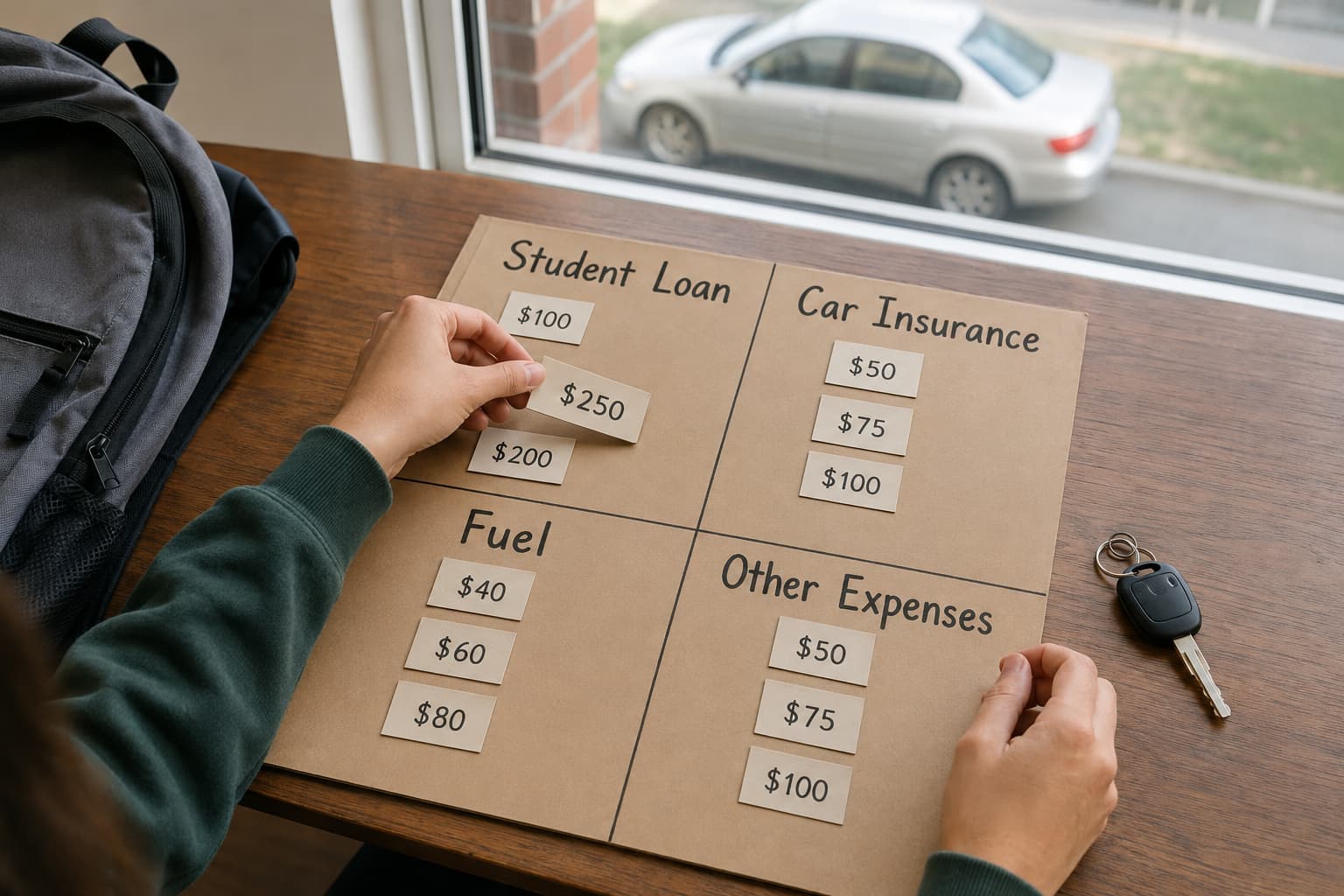
Student-loan payments are an important part of your monthly budget. If you drive, car insurance needs a place in that budget too.
That can be frustrating when the insurance price is higher than you expected. Many students are buying their first policy, driving a financed vehicle, or establishing their own insurance history. They may enter the quoting process expecting a small monthly payment and discover that insurance takes up more of the budget than planned.
The answer is not always to stop driving or let the policy lapse. Depending on your situation, you may be able to insure the vehicle with a parent, choose a more affordable coverage option, or qualify for a defensive-driving discount.
Understanding those choices can help you manage student-loan payments while keeping your car insurance current.
Why Can Car Insurance Be Expensive for Students?
Being a student does not determine your insurance rate by itself. Insurance companies consider several factors when calculating a price, which may include:
- Age and driving experience
- Driving history
- Insurance history
- Vehicle
- Location
- Annual mileage
- Drivers in the household
- Coverage selections
- Available discounts
A student with limited driving or insurance history may receive a higher rate than an older driver with years of continuous coverage. The vehicle can make a difference too. A car that is newer, financed, expensive to repair, or frequently involved in claims may cost more to insure than expected.
This is why students should check the insurance price before choosing a vehicle. A manageable car payment does not always mean the total transportation cost will fit the budget once insurance, fuel, maintenance, registration, and parking are included.
If you already own the car and the rate is difficult to manage, these three options may help.
1. See Whether Insuring the Car With a Parent Is an Option
Some students may be eligible to remain on or join a parent’s car-insurance policy. This can sometimes provide access to a multi-car discount or other household discounts.
Eligibility depends on the situation and the insurance company’s rules. Before making a change, the agent may need to know:
- Who owns the vehicle
- Where the student lives
- Where the car is normally kept
- Who regularly drives each vehicle
- Whether the student lives at home or away at school
- Which policies the household already has
The terms “multi-car discount” and “bundling discount” are sometimes used interchangeably, but they are not necessarily the same.
A multi-car discount may apply when more than one vehicle is insured on the same policy. A bundling or multipolicy discount may apply when a household buys different types of insurance, such as auto and renters insurance, from the same company.
The parent’s policy is not automatically the least expensive option. In some situations, the student may receive a better price with a separate policy. Comparing both arrangements can show which one works better.
Most importantly, the policy information needs to be accurate. A student should not use a parent’s address simply to receive a lower rate if the vehicle is regularly kept somewhere else. Tell the agent where the student lives, where the car stays, and who drives it so the available options can be reviewed correctly.
2. Choose Coverage Based on the Vehicle and Your Requirements
Students do not necessarily need every optional coverage offered during a quote. For someone driving a paid-off vehicle, Oklahoma’s minimum liability coverage may provide a more affordable way to meet the state’s insurance requirement.
Oklahoma requires drivers to carry minimum liability limits of 25/50/25. That means:
- $25,000 for bodily injury to one person
- $50,000 for bodily injury to multiple people in one accident
- $25,000 for property damage
These are liability limits. They generally apply to covered injuries or property damage the insured driver is legally responsible for causing, up to the policy limits. They generally do not pay to repair the insured driver’s own vehicle after an at-fault accident.
Minimum liability coverage may be a practical option for a student driving a paid-off vehicle and trying to keep monthly expenses manageable.
A financed or leased vehicle is different. The lender may require comprehensive and collision coverage until the loan or lease ends. Before choosing liability-only coverage, review the finance agreement or contact the lender.
A simple way to approach the decision is:
- Paid-off vehicle: Ask for the price of Oklahoma minimum liability coverage and any other options you want to compare.
- Financed or leased vehicle: Confirm the lender’s coverage and deductible requirements before selecting a policy.
- Optional coverage: Review each option individually instead of assuming that everything shown in a quote is required.
The goal is to choose a policy that meets applicable state and lender requirements while fitting the student’s actual situation.
For more information about Oklahoma liability requirements and available insurance discounts, review the Oklahoma Insurance Department’s auto-insurance FAQs.
3. Ask About a Defensive-Driving Discount
Completing a defensive-driving or accident-prevention course may help some students qualify for an insurance discount.
Discount availability varies by insurance company. The course may also need to meet specific requirements, so do not sign up for the first online class you find and assume it will lower your rate.
Ask the insurance agency:
- Does my carrier offer a defensive-driving discount?
- Am I eligible based on my age and driving record?
- Which courses are accepted?
- Does the course need to be completed in person or online?
- What certificate or documentation will I need?
- How long will the discount remain available?
Some students may also qualify for a good-student or driver-education discount, depending on the insurance company and its requirements. Ask which discounts are available rather than assuming they will be added automatically.
A discount is not guaranteed, and the amount will vary. Confirm eligibility before paying for a course.
Keep Car Insurance in the Monthly Budget
Student-loan payments may feel more permanent because they appear in the budget month after month. Car insurance can be easier to overlook, especially if the student is accustomed to being insured through a parent.
Once you are responsible for the policy, keep track of:
- The amount required to start the policy
- The regular payment amount
- The due date
- The payment method
- The policy renewal date
- Any documents needed to maintain a discount
Set a reminder several days before the insurance payment is due. If the payment comes from a debit card or bank account, update the insurance company after changing cards or financial institutions.
Do not assume that the policy will remain active automatically after a missed payment. The Oklahoma Insurance Department advises that there is no general grace period for a late auto-insurance premium, although an individual company may sometimes reinstate a policy after payment. Coverage may not apply to a loss that occurs during the unpaid period.
If you think you may miss a payment, contact the agency before the due date. Ask whether another payment schedule, available carrier, or policy option could make the cost more manageable.
Review the Student-Loan Payment Before It Becomes Late
The same early action applies to student loans.
If Nelnet services your loans, review your account for the current payment, due date, repayment plan, and available options. Some borrowers may also recognize Nelnet by its original National Education Loan Network name.
Federal student-loan plans and eligibility requirements can change. The official Federal Student Aid Repayment Calculator can help eligible borrowers compare estimated monthly payments, repayment periods, and total repayment amounts. Nelnet also provides current information about its student-loan repayment options.
A lower monthly payment may extend the repayment period or change the total amount paid. Review the complete estimate and speak with the loan servicer before making a decision.
The goal is to address a difficult payment before it becomes a missed payment. That applies to both student loans and car insurance.
Compare Student Car-Insurance Options
Students are sometimes surprised by the first insurance rate they receive and assume every company will charge the same amount.
Rates can vary. Comparing available options may help you find a more manageable price, but the quotes need to include the same information for the comparison to be useful.
Check that each quote shows the same:
- Driver
- Vehicle
- Address
- Coverage limits
- Deductibles
- Optional coverages
- Policy term
Also review the amount required to start the policy. The quote with the lowest monthly installment may require a larger initial payment or include different coverage.
Cheapest Auto Insurance is an agency, which means we can review the carrier options available through our agency. Our goal is to find the lowest rate we’re able to offer for the coverage you request.
We can also help you review whether insuring with a parent is an available option, price Oklahoma minimum liability coverage when appropriate, and check for available defensive-driving or student discounts.
Keep Both Payments Moving in the Right Direction
Paying down student loans is an important financial responsibility. Keeping car insurance current matters too, especially when the vehicle helps you get to class, work, an internship, or other daily commitments.
If your insurance rate is higher than expected, start with the three options most relevant to students:
- Ask whether insuring the vehicle with a parent is allowed and cost-effective.
- Review minimum coverage when the vehicle is paid off and the option fits your needs.
- Confirm whether an approved defensive-driving course could qualify you for a discount.
Do not wait until the insurance policy has lapsed or the student-loan payment is overdue. Reviewing both bills early gives you more time to compare your options and find a workable monthly plan.
To review the car-insurance options available through Cheapest Auto Insurance, start a quote online or call us at (800) 988-3794.
Frequently Asked Questions
Can a College Student Stay on a Parent’s Car-Insurance Policy?
Possibly. Eligibility depends on vehicle ownership, living arrangements, where the car is kept, regular drivers, and the insurance company’s rules. Give the agency accurate information so it can determine whether a parent’s policy or a separate student policy is appropriate.
Can a Student Choose Minimum Liability Coverage?
Minimum liability coverage may be an option when the vehicle is paid off. A lender or leasing company may require comprehensive and collision coverage on a financed or leased vehicle. Check the agreement before selecting liability-only coverage.
Can a Defensive-Driving Course Lower a Student’s Insurance Rate?
Some insurance companies offer discounts for approved defensive-driving or accident-prevention courses. Eligibility, approved courses, and discount amounts vary. Ask the agency what your carrier accepts before registering for a class.
What Should a Student Do if Car Insurance Is Too Expensive?
Ask the agency to compare its available carriers, review the parent-policy option, price the coverage choices available for the vehicle, and check for eligible discounts. Contact the agency before missing a payment or allowing the policy to lapse.