
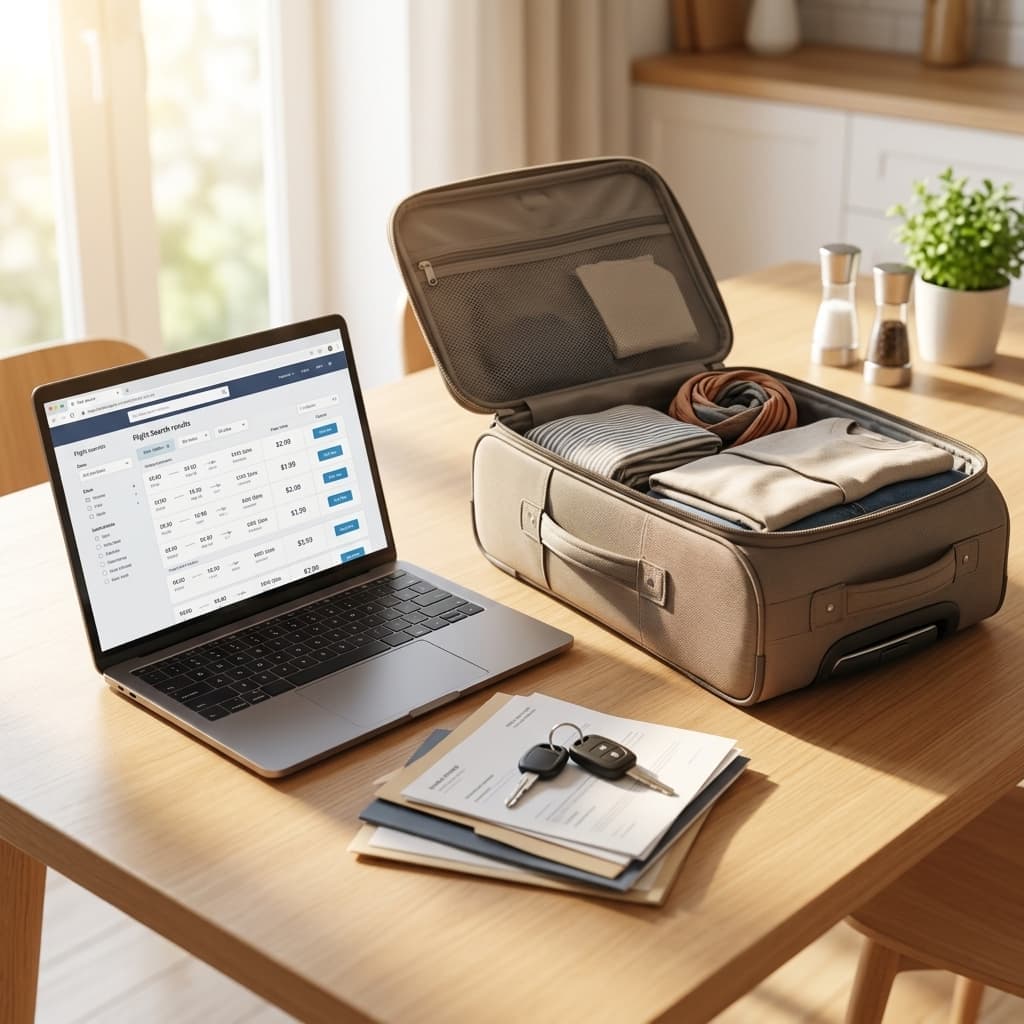
A flight can make a move feel simple for a moment. You choose the date, compare fares, book the ticket, and know when you will land. But if you will drive after that move, the car insurance question is still waiting on the other side of the airport.
That is especially easy to miss when the move starts with a Google flight ticket search. Google Travel Help explains that Google Flights can help travelers compare options and then book through an airline or online travel agency. That solves the airfare problem. It does not update your policy, confirm your new garaging address, or tell you whether your old coverage still fits once your car, license, registration, and daily driving life move to a new state.
If the flight is part of a real relocation, your car insurance needs a plan too.
The Flight Solves the Arrival, Not the Driving Situation
A one-way ticket or moving-week flight usually handles one piece of a larger transportation change. After you land, you may be using a rental car, borrowing a family member’s vehicle, waiting for your own car to be shipped, or buying a car after you arrive.
Each of those situations can raise a different insurance question. A rental car is not the same as your own insured vehicle. A borrowed car may depend partly on the vehicle owner’s policy. A car that is moving later may need uninterrupted coverage while it is still titled, registered, or financed. A vehicle you buy after landing usually needs proof of insurance before you drive it home.
That is why the best insurance question is not simply, “Do I have car insurance?” It is, “What vehicle will I drive after the move, where will it be kept, and what policy is supposed to cover it?”
A Temporary Visit Is Different From a New Home
Insurance companies usually treat a short visit differently from a permanent move. If you are flying somewhere for a week and renting a car, your home address and regular vehicle location may not change. If you are moving, those details do change.
Your garaging address matters because auto insurance is priced around where the vehicle is primarily kept and driven. Your old policy may have been built around your former ZIP code, commute, household drivers, and state rules. Once you establish a new home, your insurer generally needs updated information so the policy reflects the real risk and legal environment.
The National Association of Insurance Commissioners notes that each state has its own auto insurance rules, though most require at least a basic level of coverage. That is the heart of the moving problem: your old policy may not be the right long-term fit for a new state, even if it was perfectly fine before the flight.
Tell Your Insurer Where the Car Will Actually Live
If you already own a vehicle, one of the first insurance steps is updating where the car will actually live. This is not just a mailing-address change. Insurers often use the garaging location to rate the policy, confirm state eligibility, and match the policy to the rules where the vehicle is kept.
Before the move, ask your current insurer a few direct questions:
- Does my current policy still cover me during the move?
- When do I need to update my garaging address?
- Can this company write auto insurance in my new state?
- Will my coverage meet the new state’s minimum insurance requirements?
- Will my premium, payment plan, deductibles, or available coverages change after the move?
The answer may be simple if your insurer operates in both states. It may be more complicated if the company does not write policies where you are moving, if your vehicle is financed, or if your household drivers are changing at the same time.
If Your Car Is Coming Later, Do Not Let the Policy Fall Through the Middle
Many moves do not happen in one clean step. You might fly first, start work, stay with relatives, and wait two weeks for your own car to arrive. During that in-between period, it can be tempting to pause the policy because you are not driving the car yet.
That can create problems. If the vehicle is still registered, financed, leased, parked somewhere it could be damaged, or expected to be driven once it arrives, canceling coverage too early may create a lapse or leave the vehicle unprotected. A lapse can also make future shopping harder because many insurers look at prior insurance history when rating or underwriting a policy.
A better move is to ask your insurer how to handle the transition date. The right answer may depend on where the car is stored, when it will be transported, whether anyone else can drive it, and when it will become primarily garaged in the new state.
If You Buy a Car After You Land, Insurance Comes Before the Drive
Some people fly first because they plan to buy a vehicle after arriving. In that case, car insurance is not a detail to save for later. Dealerships, lenders, and leasing companies commonly want proof of insurance before the sale is complete or before the vehicle leaves the lot.
The coverage you need may depend on whether the vehicle is paid off, financed, or leased. State law generally focuses on required liability coverage. A lender or leasing company may require comprehensive and collision coverage because it has a financial interest in the vehicle. Your own decision may involve deductibles, liability limits, and whether the car is valuable enough to protect with physical-damage coverage even if no lender requires it.
Minimum liability coverage can be a practical, legally focused option for some drivers. It generally helps pay for injuries or property damage you cause to others, up to the policy limits, but it usually does not repair your own vehicle after an at-fault crash. If the car is financed or leased, minimum liability alone may not satisfy the lender or lease agreement.
Registration and Insurance Deadlines Belong on the Same Checklist
A move can also trigger driver license, registration, title, and proof-of-insurance steps. Those deadlines vary by state, which is why national advice should not pretend there is one universal timeline. USA.gov’s state motor vehicle services page is a useful official starting point for finding the correct DMV or motor vehicle agency in your new state.
The insurance piece should not be separated from that paperwork. In many states, registering a vehicle requires proof of insurance that meets that state’s rules. If you update the registration but leave the insurance behind, or cancel the old insurance before the new state process is ready, you may create an avoidable problem.
The practical order is simple: confirm what your new state requires, talk to your insurer before canceling or changing anything, and keep proof of coverage available during the transition.
Match Coverage to the Vehicle You Are Bringing Into the Move
Moving can change how much protection makes sense, even when the legal requirement is straightforward. A paid-off older sedan, a financed SUV, and a leased vehicle do not create the same insurance decision.
As you settle into the new address, review:
- Liability limits, especially if your assets or driving exposure have changed.
- Comprehensive coverage, which may matter if the new area has theft, hail, flood, falling-object, or animal-strike risks.
- Collision coverage, especially if repairing or replacing the vehicle out of pocket would be difficult.
- Deductibles, because a lower monthly premium can come with a larger repair bill after a covered claim.
- Household drivers, including roommates, relatives, or newly licensed drivers who may affect the policy.
- Vehicle use, including a new commute, remote work, school drop-offs, or business-use driving that should be disclosed.
None of these automatically means you need more coverage or less coverage. The point is to make the policy match the new reality instead of carrying an old setup into a new life by accident.
A Simple Car Insurance Checklist When the Flight Is Part of a Move
Before travel day, or shortly after you land, work through a short checklist:
- Confirm whether your current auto policy covers the moving period.
- Ask when your garaging address must be updated.
- Find out whether your insurer writes policies in the new state.
- Check the new state’s insurance, license, and registration requirements through its official motor vehicle agency.
- Keep coverage active on any vehicle that remains registered, financed, leased, stored, or expected to be driven.
- If you are buying a car after arrival, arrange insurance before pickup.
- Compare coverage using the same limits and deductibles so the decision is not based on price alone.
- Keep proof of insurance easy to access while you handle registration and moving paperwork.
This checklist does not need to be stressful. It simply keeps the insurance work close to the moment when the driving situation changes.
The Move Is Finished When the Car Details Catch Up
A flight may be the most visible step in a move, but it is not the last transportation step. The move becomes real for car insurance when the vehicle has a new home, the driver has a new routine, the registration rules may have changed, and the policy needs to reflect all of it.
If your flight is part of a move, do not wait until the first registration appointment, dealership visit, or traffic stop to think about insurance. Once you know where you are going, what you will drive, and when the vehicle will live there, you can plan coverage with fewer surprises.
The ticket gets you there. The insurance plan helps you drive there legally and with a clearer understanding of what your policy is built to do.
FAQ
Do I need new car insurance as soon as I move to another state?
Not always the same day you land, but you should contact your insurer before or shortly after the move. State requirements, insurer availability, registration rules, and garaging address changes can all affect when you need a new or updated policy.
Can I keep my old auto insurance after moving?
Sometimes, but not always. If your insurer writes policies in the new state, it may be able to update your policy. If it does not, or if the policy no longer meets the new state’s requirements, you may need to switch coverage.
What if I fly first and bring my car later?
Keep the vehicle’s insurance situation active and intentional. If the car remains registered, financed, leased, stored, transported, or expected to be driven, canceling coverage too early may create a lapse or leave the vehicle exposed. Ask your insurer how to handle the transition date.
Does moving automatically make car insurance cheaper or more expensive?
No. A move can affect your premium, but the direction depends on the new location, vehicle, coverage choices, driving record, household drivers, insurance history, state rules, and the insurer’s rating approach.
Should I buy only minimum liability coverage after a move?
Minimum liability coverage may satisfy the legal requirement in many situations and can be a practical choice for some budgets. It generally does not repair your own vehicle after an at-fault crash, and it may not satisfy a lender or lease agreement. Compare the legal requirement, the vehicle’s value, and your ability to handle a repair bill before deciding.