
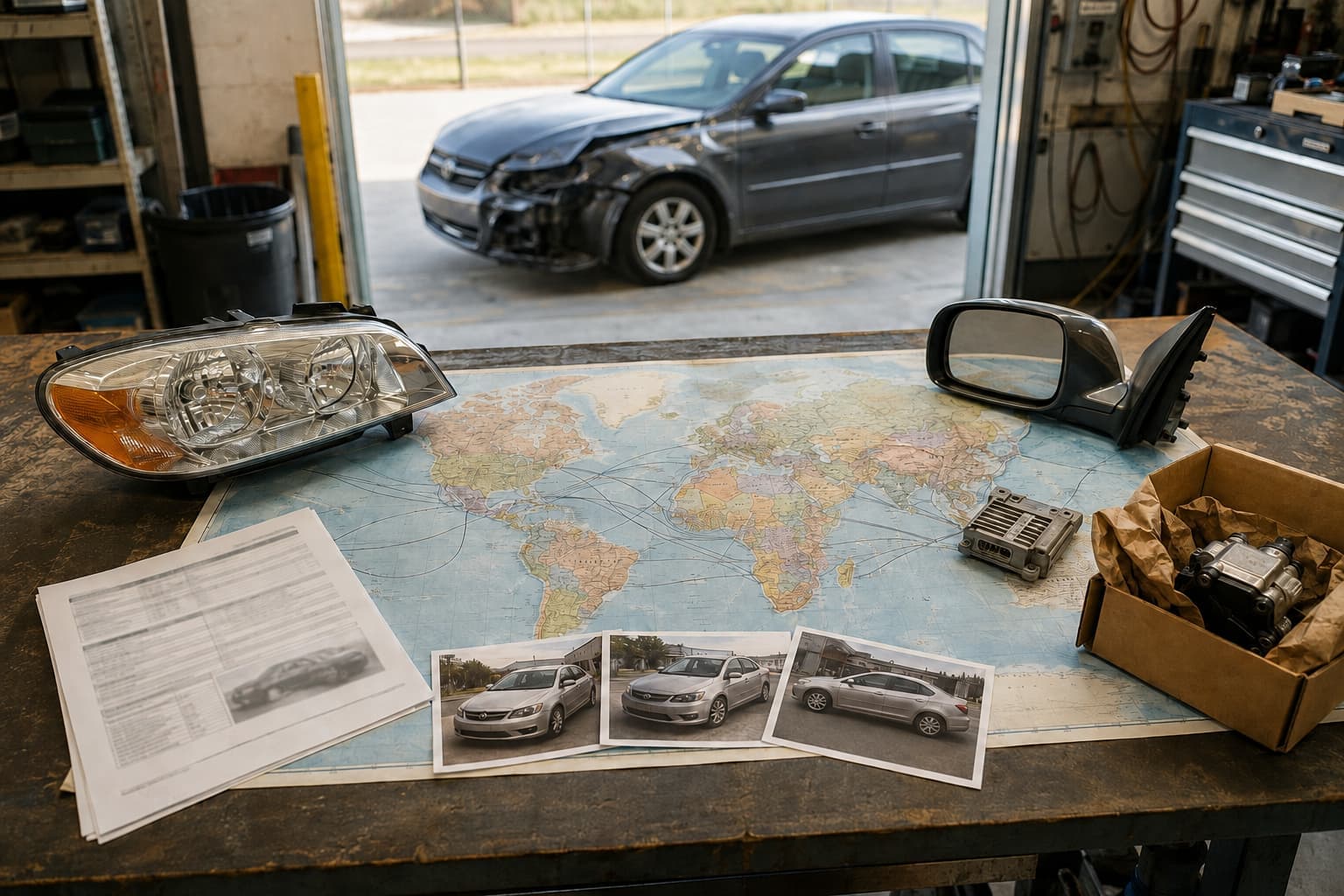
Auto tariffs can affect the cost of vehicles and replacement parts, but they do not automatically increase an insurance settlement.
Where tariffs may matter is the vehicle market. If comparable used cars become more expensive or repair costs rise, those changes can affect some of the numbers involved when a vehicle is totaled.
That does not mean an insurance company adds a tariff percentage to the value of your car.
Instead, auto tariffs and total losses are connected through vehicle values, comparable-car prices, and repair costs.
Here’s what drivers should know.
How Can Auto Tariffs Affect a Total Loss?
Auto tariffs can affect a total loss in two main ways.
First, tariffs on certain imported vehicles, parts, or materials may contribute to changes in vehicle prices. If similar used cars become more expensive in your area, those market prices may be relevant when determining what a totaled vehicle was worth.
Second, higher parts costs can increase the price of repairing a damaged vehicle. If a car is already close to being considered a total loss, a higher repair estimate can become part of that decision.
Neither result is automatic.
Tariffs are only one factor that can affect vehicle and repair prices. Supply, demand, labor costs, vehicle availability, and other market conditions can also move prices up or down.
A tariff can influence the market, but it is not a formula for calculating an insurance claim.
How Is a Totaled Vehicle Valued?
When a covered vehicle is totaled, its value is generally based on what the vehicle was worth immediately before the loss.
That is often referred to as its actual cash value.
Factors that may be considered include:
- year, make, and model
- trim
- mileage
- condition
- equipment and options
- comparable vehicles in the relevant market
The value of similar used vehicles can be an important part of determining what your car was worth before it was totaled.
That also means the settlement is not automatically based on what you originally paid for the car, what you still owe on the loan, or what another vehicle costs today.
Your settlement starts with the value of the vehicle you lost—not simply the price of the vehicle you want to buy next.
Can Auto Tariffs Increase the Value of Comparable Cars?
Potentially, but the effect would be indirect.
Suppose similar used vehicles in your area had been selling for around $18,000.
Several months later, the vehicle market changes and comparable cars are now closer to $20,000.
An insurance company would not simply add a tariff percentage to your total-loss settlement.
But if the actual market value of vehicles similar to yours has increased, those comparable prices may become relevant when determining what your vehicle was worth before the loss.
The opposite can also happen. Other market conditions may offset tariff-related costs or keep used-car values from changing very much.
That is why the most useful question is not:
“How much did tariffs increase car prices nationally?”
It is:
“What are vehicles like mine worth in the market being used for my valuation?”
Can Higher Parts Costs Cause a Car to Be Totaled?
Higher parts costs can contribute to a larger repair estimate and may push a badly damaged vehicle closer to being declared a total loss.
But the cost of replacement parts is only one factor.
A total-loss decision can also involve:
- vehicle value
- labor costs
- structural damage
- paint and materials
- scanning and calibration
- hidden damage
- salvage value
- safe-repair considerations
- applicable state rules
So a higher parts bill can affect the repair calculation without automatically deciding that a vehicle is totaled.
What Should You Check on a Total-Loss Valuation?
If your vehicle is totaled, do not look only at the final dollar amount.
When a valuation report is available, review the information used to reach that value.
Check:
- Year, make, model, and trim: Make sure the correct version of your vehicle is being valued.
- Mileage: Verify that the mileage is accurate.
- Options and equipment: Look for important factory packages and permanently installed features.
- Condition: Review any adjustments based on the vehicle’s condition.
- Comparable vehicles: Check whether the vehicles being compared are actually similar to yours.
- Local market prices: Look at what genuinely comparable vehicles are listed for in the relevant market.
Comparable vehicles should be reasonably similar in areas such as trim, mileage, equipment, condition, and location.
If you find comparable listings that appear substantially different from the valuation, save the seller, location, mileage, trim, asking price, and date you found the listing.
An asking price does not necessarily prove what a vehicle will ultimately sell for, but it can give you something specific to review if you believe the valuation is inaccurate.
What If You Owe More Than the Vehicle Is Worth?
A changing vehicle market can make a total loss especially difficult because three important numbers may not be the same.
For example:
- Vehicle value before the loss: $18,000
- Remaining loan balance: $21,000
- Price of a similar replacement vehicle: $20,500
The $18,000 represents the value of the vehicle that was totaled.
The $21,000 is what is still owed to the lender.
The $20,500 is what it may cost to buy a similar vehicle in the current market.
Those numbers do not automatically move together.
If the vehicle is worth less than the remaining loan balance, money may still be owed after the vehicle claim is handled.
Gap coverage may help with an eligible difference between the covered vehicle value and the remaining loan balance, depending on the terms of the gap product.
Vehicle value, loan balance, and replacement price are three different numbers.
Does the Deductible Still Apply to a Total Loss?
Yes, when an applicable collision or comprehensive deductible applies to the covered loss, that deductible may still reduce the claim payment.
For example, if a vehicle is valued at $18,000 and the applicable deductible is $1,000, the deductible can affect the amount paid under the policy.
Higher vehicle prices do not make the deductible disappear.
This is another reason it helps to understand the deductible on your policy before a claim happens.
What Can You Do Before a Total Loss?
You cannot control tariffs or the used-car market, but you can keep records that make a future vehicle valuation easier to review.
Consider saving:
- title and registration information
- current insurance documents
- loan information
- current mileage
- exact trim and package information
- photos showing the vehicle’s condition
- receipts for significant permanently installed equipment
- information about any gap product you purchased
It can also help to take updated photos of your vehicle from time to time so you have a record of its condition before a loss.
Good records make it easier to check whether the information used in a total-loss valuation accurately describes your vehicle.
What Should Drivers Remember About Auto Tariffs and Total Losses?
Auto tariffs do not automatically increase a total-loss insurance settlement.
Their effect, if any, comes through the vehicle market.
If tariffs contribute to higher used-vehicle prices, those changes may eventually appear in the prices of comparable cars.
If parts become more expensive, repair estimates may also increase.
But a total-loss claim still comes back to the specific vehicle, its condition and mileage, comparable vehicles, repair costs, applicable policy terms, and the deductible.
When auto tariffs and total losses meet, focus on the value of your vehicle and the market evidence behind that value—not just the tariff headline.
Frequently Asked Questions
Do auto tariffs increase total-loss settlements?
Not automatically. Auto tariffs may influence vehicle and parts prices, but a total-loss settlement generally depends on the value of the specific vehicle before the loss and the applicable policy and claim factors.
Can tariffs make my totaled car worth more?
Possibly, but only indirectly. If market changes contribute to higher prices for genuinely comparable used vehicles, those prices may be relevant when determining what your vehicle was worth.
Can higher parts prices cause my car to be totaled?
Higher parts costs can increase a repair estimate and may contribute to a vehicle being considered a total loss. Vehicle value, labor, structural damage, salvage value, safe-repair considerations, and applicable rules can also matter.
Does insurance pay the replacement price of a totaled car?
Not necessarily. A typical total-loss valuation is based on what the covered vehicle was worth before the loss rather than automatically paying whatever another vehicle costs today.
What should I check on a total-loss valuation?
Check the year, make, model, trim, mileage, condition, equipment, adjustments, and comparable vehicles. If something appears inaccurate, identify the specific issue and provide better information when available.