
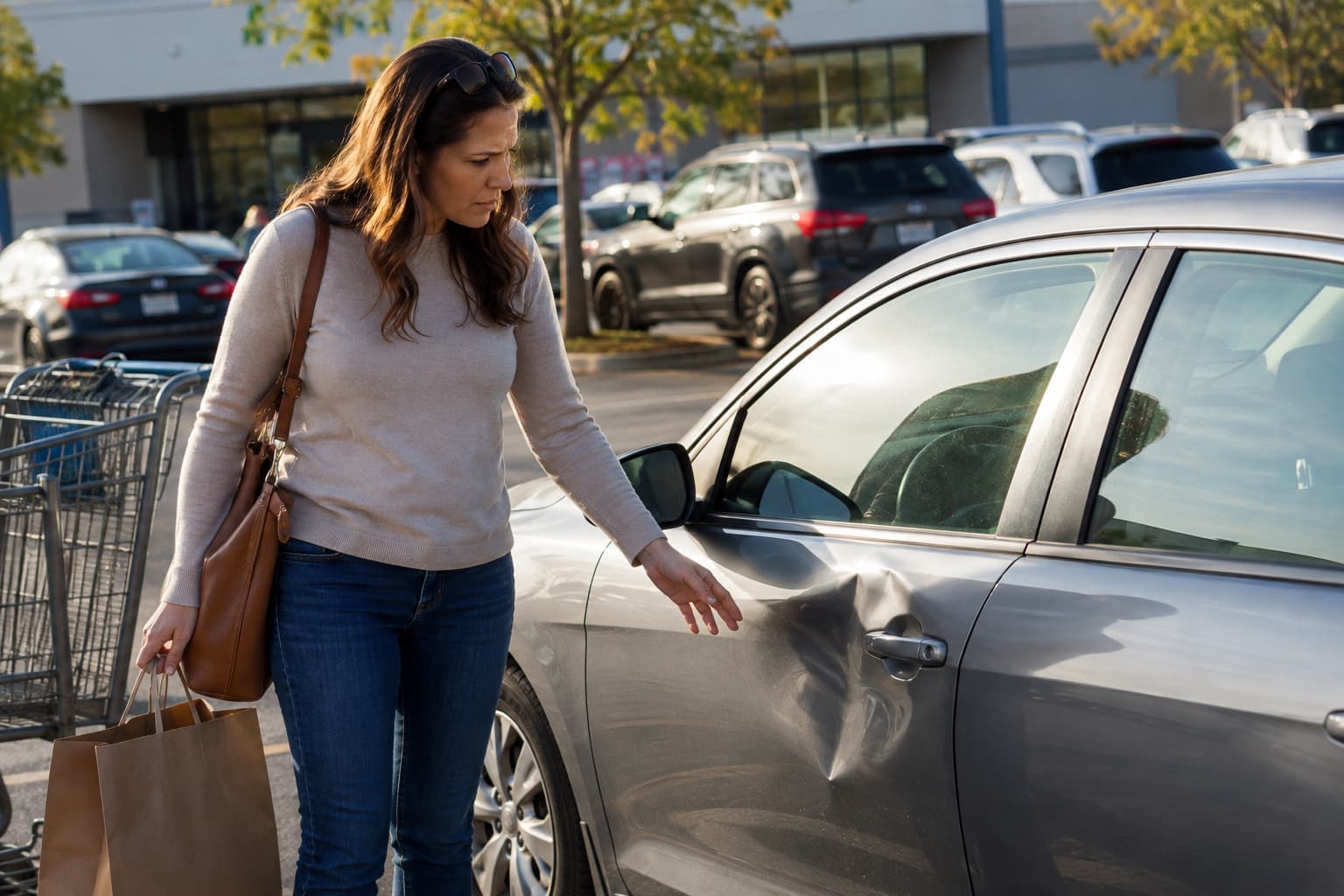
You walk back to your parked car and notice something that wasn’t there before—a fresh dent, a deep scrape, a broken mirror, or shattered glass.
No one is waiting. Maybe there’s a note under the windshield wiper. Maybe the parking space next to you is already empty.
Your first instinct might be to move the car, call a repair shop, or decide whether it’s worth filing an insurance claim. Before you do, take a few minutes to document what you see.
The dent will still be there tomorrow. A witness, security camera footage, pieces of debris, or other evidence may not.
Taking the right steps now can help you preserve important information, understand what may have happened, and make it easier to decide what to do next.
What to Do First
If you find unexpected damage on your parked car, follow these steps:
- Check whether the vehicle is safe to approach and drive.
- Take photos of the damage and the surrounding area.
- Look for witnesses and nearby security cameras.
- Check whether another driver left a note.
- Ask whether a police report is appropriate.
- Identify what likely caused the damage.
- Review the deductible for the coverage that may apply.
- Contact your insurer with a clear timeline and the facts you collected.
Every situation is different, but following these steps helps preserve useful information before it disappears.
Before You Move the Car, Preserve What the Scene Can Tell You
Start by checking whether the car is safe to approach and drive.
Broken glass, leaking fluid, a damaged tire, a loose bumper, or a light hanging by its wiring can turn cosmetic-looking damage into a safety problem. If you are unsure whether the vehicle is safe, do not drive it until a qualified person has looked at it.
If the area is safe, document the scene before changing it.
Take wide photos that show where the vehicle is parked, followed by closer photos of every damaged area. Photograph any:
- Debris near the vehicle
- Transferred paint
- Tire marks
- Broken vehicle pieces
- Damaged signs, poles, or barriers
- Notes left on the windshield
- Nearby vehicles that may be relevant
Capture the license plates of nearby vehicles only when they may be connected to what happened. Avoid posting accusations or identifying information online before the facts are known.
Record a few additional details while they are fresh:
- The date and approximate time you discovered the damage
- The address, parking level, row, or space number
- The weather and lighting conditions
- The direction the car was facing
- The names and contact information of witnesses
- The locations of nearby security or doorbell cameras
Do not wash the damaged area or throw away loose pieces until you have photographed them.
The goal is not to solve the case yourself. It is to give the police, insurer, or repair shop a reliable starting point.
Common Mistakes to Avoid
Finding damage on a parked car is frustrating, and it is easy to make decisions too quickly.
Try to avoid:
- Driving away before taking photos
- Washing dirt, paint transfer, or debris from the vehicle
- Throwing away broken pieces before documenting them
- Assuming a nearby driver caused the damage without evidence
- Posting accusations or license-plate photos online
- Authorizing permanent repairs before learning whether an inspection is needed
Most of these mistakes take only a few seconds to make, but they can remove information that may help explain what happened later.
If No One Is There When You Return
The first thing to do is look around before moving your vehicle.
Check for nearby witnesses, security cameras, or anyone who may have seen what happened. A store, apartment office, school, parking operator, or nearby homeowner may have video covering the area.
Security footage isn’t always kept for long. If you believe a camera may have captured the damage, ask whether the recording can be preserved and write down who you spoke with. Even if the business can’t provide a copy directly, documenting the camera’s location may help law enforcement or your insurance company request it later.
If you find a note left by another driver, photograph it before removing it from the windshield. Then contact the driver and ask for their:
- Name
- Phone number
- Insurance company
- Policy number
- Vehicle description
- License plate number
A note is a good start, but it’s still important to verify the information before assuming responsibility has been established.
If appropriate, contact your local police department or non-emergency line to ask whether a report should be filed. Reporting requirements vary by location, and some departments allow reports to be submitted online or over the phone.
Finally, avoid guessing what caused the damage. A dent could have come from another vehicle, a shopping cart, vandalism, or even a falling object. Understanding what caused the damage is one of the biggest factors in determining what happens next.
What This Could Look Like
Imagine you park outside a grocery store while running a few errands. When you return, there is a dent in the passenger door, but the other driver is gone.
Instead of driving home immediately, you take photos of the damage, the parking space, nearby vehicles, and the location of the store’s security cameras. You also ask the manager whether footage from that area can be preserved.
Those extra few minutes may provide more useful evidence than anything you can collect after leaving.
Even if the store cannot release the footage directly to you, documenting where the camera is located can help an insurer or law enforcement follow up.
Coverage Depends on What Happened
Just because your car was parked doesn’t automatically determine which coverage may apply.
When you report damage, one of the first things an insurance company looks at is what caused it. A parked car can be damaged in many different ways, and the cause often determines how the claim is handled.
| What may have caused the damage | Coverage that may apply |
|---|---|
| Another vehicle | Collision coverage on your policy or the responsible driver’s property damage liability coverage |
| Hail | Comprehensive coverage |
| Vandalism | Comprehensive coverage |
| Theft or attempted theft | Comprehensive coverage |
| Fire | Comprehensive coverage |
| Falling tree branch or object | Comprehensive coverage |
| Shopping cart or another object | Depends on how the damage occurred and what evidence is available |
| Unknown cause | Depends on the evidence, policy terms, and claim investigation |
What Your Insurance Company Will Want to Know
When you report damage to a parked car, your insurance company will likely ask several questions to better understand what happened and determine how the claim should be handled.
Having this information ready can help make the process smoother.
You may be asked:
- What caused the damage?
- When and where did it happen?
- Did you take photos of the damage and the surrounding area?
- Were there any witnesses or security cameras nearby?
- Has the vehicle been moved since you discovered the damage?
- Does the vehicle need immediate repairs for safety reasons?
You may not know every answer right away, and that’s okay. Providing accurate information and documenting what you find can make it easier for your insurance company to understand what happened and determine the next steps.
Should You File a Claim?
Once you’ve documented the damage, the next step is deciding whether filing an insurance claim makes sense.
One of the biggest factors is your deductible.
For example, if your collision deductible is $1,000 and the damage costs $800 to repair, paying out of pocket may be less expensive than filing a claim. On the other hand, if the repairs are expected to cost several thousand dollars, using your insurance may make more sense.
Keep in mind that visible damage isn’t always the full story.
A bumper cover, for example, can hide damage to:
- Broken brackets
- Parking sensors
- Cameras
- Wiring
- Impact-absorbing material
- Other components behind the bumper
If the vehicle is safe to drive, a reputable repair shop can help determine whether the damage is only cosmetic or if additional repairs may be needed underneath.
Before deciding that the damage is too minor to report, consider contacting your insurance company or agent to understand what information they may need. Some policies require prompt notice of a loss, even while you’re still deciding whether to move forward with a claim.
It’s also common to wonder whether simply calling your insurance company will increase your premium. The answer isn’t always straightforward. Future rates can depend on several factors, including the insurance company, state regulations, fault determination, claim history, and the details of the loss. Rather than making assumptions, ask your insurer how the claim process works and what information they need before making your decision.
How to Report the Damage
If you decide to file a claim, the more organized your information is, the easier it can be for your insurance company to understand what happened.
Before you call, gather:
- Photos of the damage and surrounding area
- The date, time, and location where you found the damage
- Witness names and contact information, if available
- Locations of nearby security cameras
- The police report number, if one was filed
- The other driver’s information, if it is known
When explaining what happened, stick to the facts.
For example:
Helpful
“I found blue paint on the left rear door after returning to my vehicle.”
Less Helpful
“The blue truck parked next to me must have done it.”
If you aren’t sure what happened, it’s perfectly fine to say so. Your insurance company will use the available evidence to better understand the situation.
Before ending the call, it’s also a good idea to ask:
- Does my vehicle need to be inspected before repairs begin?
- What documents or photos do you need?
- Are temporary repairs okay if they’re needed for safety?
- Is towing or rental reimbursement available under my policy?
Before You Schedule Repairs
Not every dent needs immediate attention, but some damage can affect whether your vehicle is safe to drive.
Have the vehicle inspected as soon as possible if you notice:
- A broken taillight
- A damaged tire
- A cracked windshield that affects your visibility
- Leaking fluids
- Exposed wiring
- A loose bumper or body panel
If you plan to file an insurance claim, ask your insurance company whether the vehicle should be inspected before permanent repairs begin. If temporary repairs are needed to keep the vehicle safe or prevent additional damage, save your receipts and take photos before and after the work.
Every policy is different, so it’s also a good idea to ask whether benefits like rental reimbursement apply before making arrangements.
What’s Next?
Finding damage on your parked car can be frustrating, especially when you don’t know what happened or who is responsible.
While you may not have every answer right away, taking the right steps early can make the process much easier. Document the damage, gather as much information as possible, and understand what may have caused it before making decisions about repairs or filing a claim.
If you have questions about your coverage or need help reviewing your policy, your insurance company or agent can explain what protections may be available based on your specific situation.
Looking for Affordable Auto Insurance?
If finding damage on your parked car has you thinking about your current coverage, now is a great time to review your options. Compare rates online with CheapestAutoInsurance.com and see if you can find the protection you need at a price that fits your budget.
Start your free online quote today to see how much you could save in just a few minutes.
Frequently Asked Questions
What should I do first if I find damage on my parked car?
Take photos of the damage before moving your vehicle. Then look for witnesses, nearby security cameras, or a note from another driver. Preserving the scene first gives you the best chance of documenting what happened.
Does car insurance cover damage to a parked car when the other driver leaves?
Damage to a parked car may be covered by your insurance or the other driver’s insurance, depending on what happened. If another driver is identified, their property damage liability coverage may pay for the repairs. If they cannot be identified, your own coverage may apply if your policy includes it.
Should I call the police if someone damaged my parked car?
Contact your local police department or non-emergency line to find out whether a report should be filed. Reporting requirements vary by location, but having a police report may help document the incident for your insurance company.
Is damage to a parked car covered by comprehensive or collision insurance?
The answer depends on what caused the damage. Damage from another vehicle generally falls under collision coverage, while damage caused by hail, vandalism, theft, fire, or a falling object is often covered under comprehensive coverage if your policy includes it.
Should I file an insurance claim for minor parked-car damage?
Compare the estimated repair cost with your deductible before deciding. Even if the damage appears minor, consider having the vehicle inspected first since some damage may not be visible from the outside.